The RX 9070 XT is the top card in AMD’s Radeon RX 9070 Series, built on RDNA 4 with 64 compute units, 16 GB of GDDR6 and a $599 launch price. It’s built for high-refresh 1440p and capable 4K gaming, and AMD positioned it directly against NVIDIA’s RTX 5070 Ti, which launched at $150 more.
Our build team breaks down the specs, what RDNA 4 and FSR 4 change, how it compares with the cards around it, what it costs in 2026, and who should buy one.
In This Guide
RX 9070 XT Specs at a Glance
The AMD Radeon RX 9070 XT launched on March 6, 2025 at a $599 suggested price. It uses AMD’s RDNA 4 architecture on a PCIe 5.0 x16 interface. These specs come from AMD’s official RX 9070 XT product page.
| Spec | Radeon RX 9070 XT |
|---|---|
| Compute units / stream processors | 64 / 4,096 |
| Ray accelerators / AI accelerators | 64 / 128 |
| Game / boost clock | 2,400 MHz / up to 2,970 MHz |
| Memory | 16 GB GDDR6, 256-bit, 20 Gbps |
| Memory bandwidth | Up to 640 GB/s |
| Infinity Cache | 64 MB |
| Typical board power | 304 W |
| Recommended PSU (AMD) | 750 W |
| Power connectors (AMD spec) | 2x 8-pin |
| Outputs | DisplayPort 2.1a, HDMI 2.1b |
The headline is 16 GB of memory at a mid-range price. AMD uses GDDR6 rather than GDDR7, but backs it with 64 MB of Infinity Cache, a large on-chip cache that cuts down on trips out to video memory. The card also runs on standard 8-pin power connectors in AMD’s reference spec, so there’s no 16-pin cable to plan around.
On the display side, DisplayPort 2.1a and HDMI 2.1b cover current high-refresh monitors and 4K TVs. Radeon cards support AMD FreeSync variable refresh, so a FreeSync monitor keeps motion smooth when frame rates dip below the panel’s refresh rate. If you’re upgrading an older system, also confirm your motherboard has a free full-length PCIe x16 slot and your case has room for a large partner cooler.
What RDNA 4 Brings
RDNA 4’s headline upgrades are in ray tracing hardware and AI-based upscaling. Each of the 64 compute units carries a ray accelerator, and the chip adds 128 AI accelerators. Those arrived alongside FSR 4, AMD’s machine-learning upscaler, which launched exclusively on RX 9000 cards.
AMD’s own launch claim is that the 9070 XT is over 40% faster on average than the RX 7900 GRE at 1440p. That’s AMD’s figure from its own testing, not an independent result, but it shows where AMD aimed the card: a big generational step for high-refresh 1440p play.
A practical point: compute units and CUDA cores aren’t comparable numbers. AMD’s 4,096 stream processors and NVIDIA’s 8,960 CUDA cores on the RTX 5070 Ti count different things, so never compare shader counts across brands.
FSR 4, FSR Redstone and AMD Software
FSR 4 is AMD’s machine-learning upscaler, and it launched exclusively on the RX 9000 Series. AMD’s current FSR suite is branded AMD FSR Redstone, and it’s listed among the supported technologies on the 9070 XT’s product page.
The driver package, AMD Software: Adrenalin Edition, adds more tools on top:
- HYPR-RX: one-click profiles that switch on AMD’s performance and latency features together.
- Radeon Anti-Lag: reduces input lag by controlling how far the CPU queues work ahead of the GPU.
- AMD Fluid Motion Frames (AFMF): driver-level frame generation designed to raise frame rates.
As with NVIDIA’s DLSS, the newest upscaling and frame generation features depend on per-game support. Before you buy, check that your main games support FSR 4 or Redstone. Frame generation also works best on top of a healthy base frame rate, since responsiveness still follows the frames the GPU actually renders.
How the 9070 XT Compares
| Spec | RX 9070 | RX 9070 XT | RTX 5070 | RTX 5070 Ti |
|---|---|---|---|---|
| Shaders | 3,584 SP | 4,096 SP | 6,144 CUDA | 8,960 CUDA |
| Memory | 16 GB GDDR6 | 16 GB GDDR6 | 12 GB GDDR7 | 16 GB GDDR7 |
| Bus / bandwidth | 256-bit, 640 GB/s | 256-bit, 640 GB/s | 192-bit | 256-bit, 896 GB/s |
| Board power | 220 W | 304 W | 250 W | 300 W |
| Recommended PSU | 650 W | 750 W | 650 W | 750 W |
| Launch price | $549 | $599 | $549 | $749 |
Versus the RX 9070: the XT adds eight compute units (64 vs 56) and much higher clocks, for $50 more at launch and 84 W more power. Both have 16 GB. Our RX 9070 vs 9070 XT guide explains which one fits your build.
Versus the RTX 5070 Ti: this is the matchup AMD chose. The Radeon card launched $150 cheaper with the same 16 GB capacity. NVIDIA answers with GDDR7 bandwidth, DLSS Multi Frame Generation, DLSS 5 and its NVENC encoders. See our 9070 XT vs 5070 Ti comparison for the full picture.
Versus the RTX 5070: for $50 more at launch, the AMD card gives you 16 GB instead of 12 GB, which is a real advantage for 4K textures and for keeping the card longer.
RX 9070 XT Price in 2026
The RX 9070 XT price at launch was $599 US. In 2026, a global DRAM and GDDR memory shortage driven by AI data-center demand has pushed graphics card street prices well above launch levels, and Radeon cards are no exception. Prices move week to week, so check what each model costs today in our graphics card range.
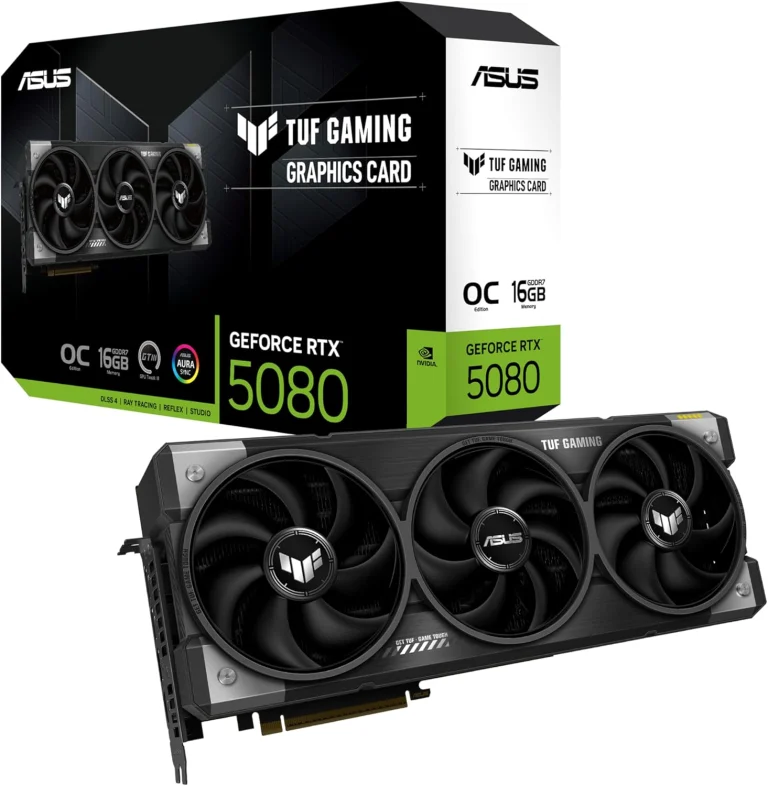
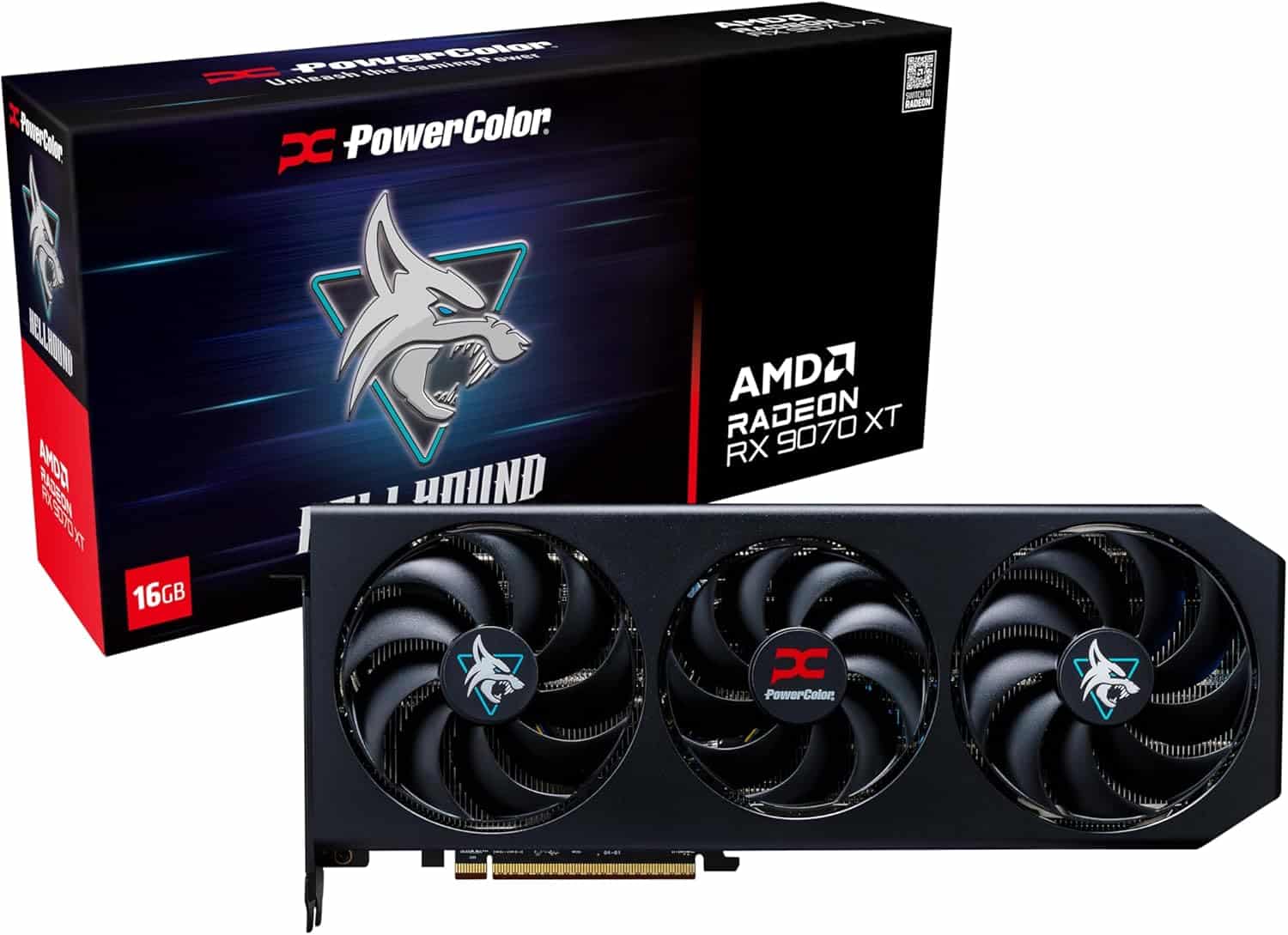
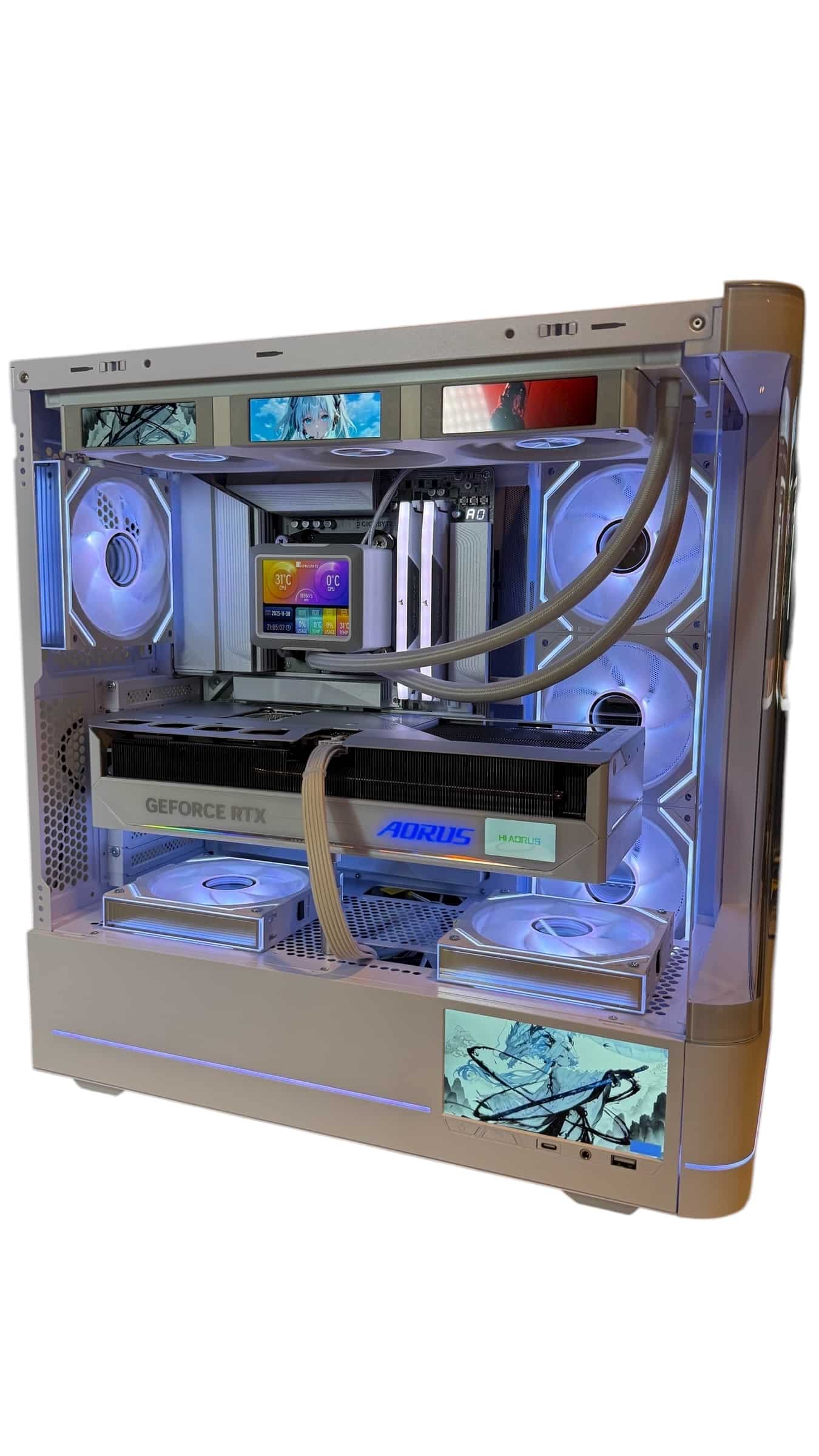
Every partner model shares the same 64 compute units and 16 GB of memory. What changes is the cooler, clocks, noise, size, looks and sometimes the power connectors, so check each product page before you buy. In our range you’ll find the PowerColor RX 9070 XT Hellhound, XFX RX 9070 XT Swift, Sapphire RX 9070 XT Pulse, GIGABYTE RX 9070 XT OC and ASUS TUF RX 9070 XT.
The value argument holds up best when the price gap to the RTX 5070 Ti stays wide. If street prices bring the two cards close together, NVIDIA’s feature set gets harder to pass up, so compare current prices side by side.
Power, Cooling and Partner Cards
At 304 W typical board power, the 9070 XT sits in the same class as the RTX 5070 Ti. AMD recommends a 750 W power supply, and its reference spec uses two standard 8-pin connectors.
- Power supply: a quality 750 W unit is the baseline; 850 W adds comfortable headroom.
- Size: partner coolers vary a lot, so check GPU length and slot width against your case.
- CPU: pair it with a fast gaming chip such as the Ryzen 7 9800X3D or 7800X3D for high-refresh play.
- Memory: 32 GB of DDR5 is the standard for a new gaming PC in 2026.
For a full parts list, our RX 9070 XT build guide covers every component.
Who Should Buy It
The AMD Radeon RX 9070 XT makes the most sense if you:
- play at 1440p on a high-refresh monitor, or at 4K with upscaling;
- want 16 GB of memory without paying for a higher-tier card;
- prefer standard 8-pin power and AMD’s Adrenalin software tools;
- find a meaningful price gap versus the RTX 5070 Ti at the time you buy.
Look at NVIDIA instead if path tracing, DLSS Multi Frame Generation or DLSS 5 are priorities, if you stream heavily with NVENC, or if your creative tools rely on CUDA, which runs only on NVIDIA GPUs.
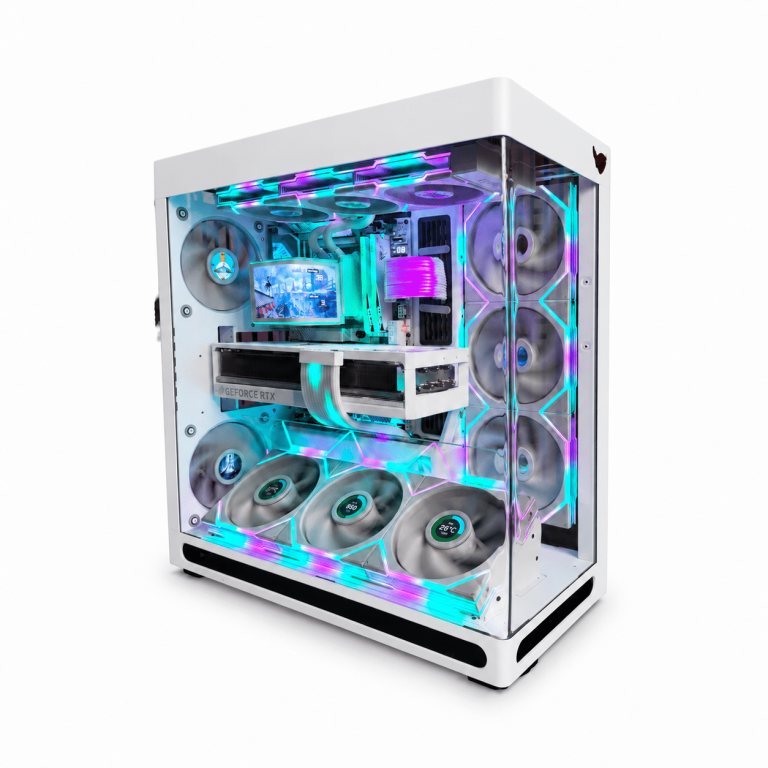
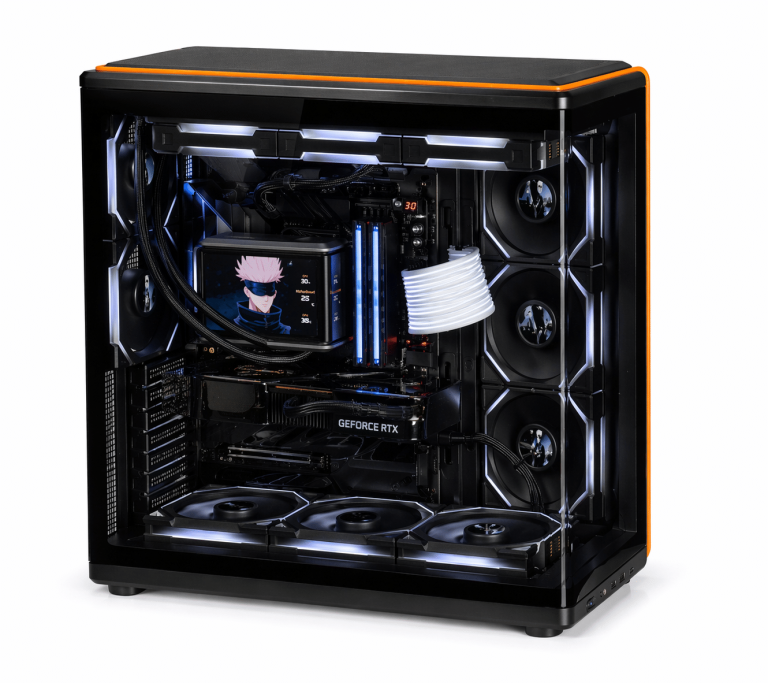
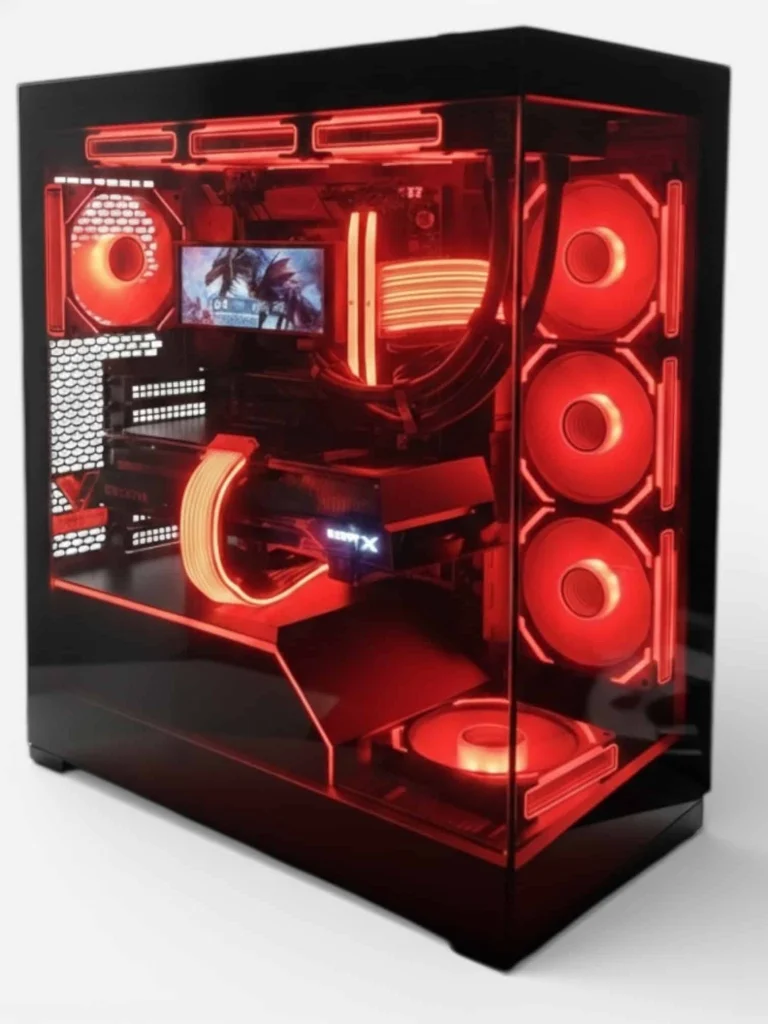
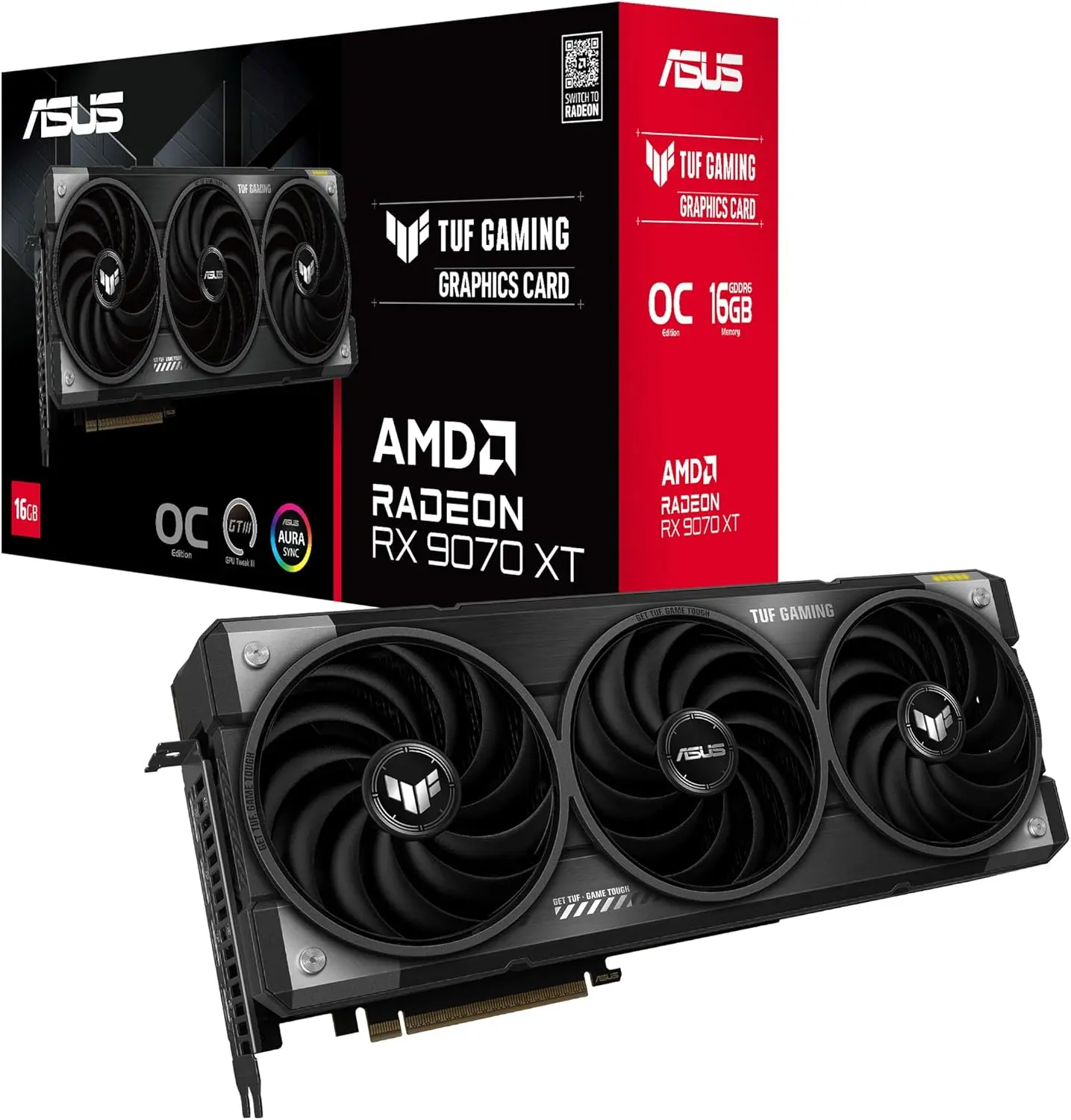
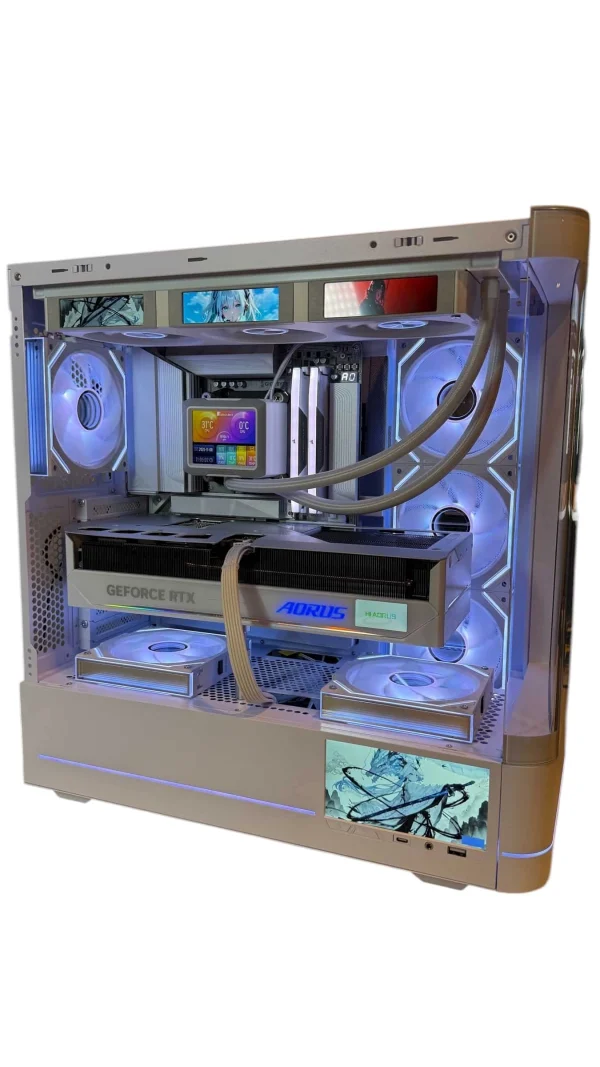
Want it in a finished system? A ready-made 1440p gaming PC is the easiest route, and every Luxvibe PC is hand-built to order.
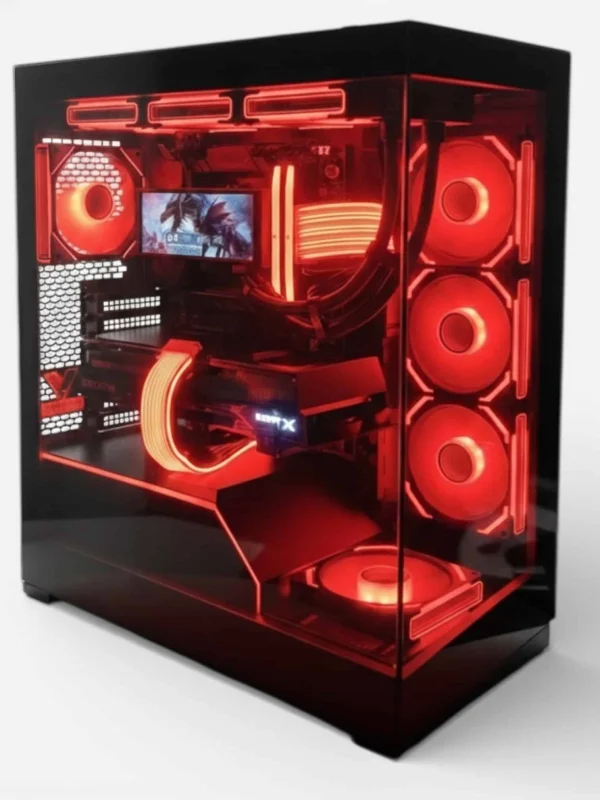
LUX Optic ICE 9070XT
- GPURX 9070 XT
- CPURyzen 7 9800X3D
- RAM32GB DDR5
- SSD2TB NVMe
Lux Nv5 Black 9070XT
- GPURX 9070 XT
- CPURyzen 7 9800X3D
- RAM32GB DDR5
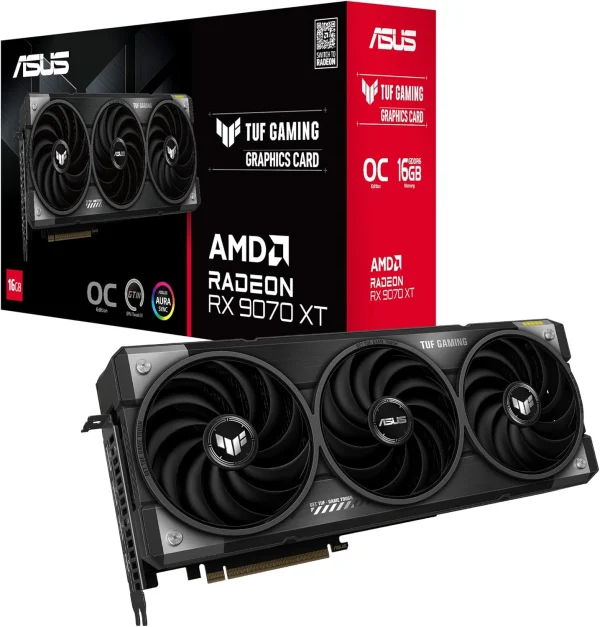
ASUS TUF Gaming RX 9070 XT
The ASUS TUF Gaming RX 9070 XT puts AMD Radeon RX 9070 XT power into your…
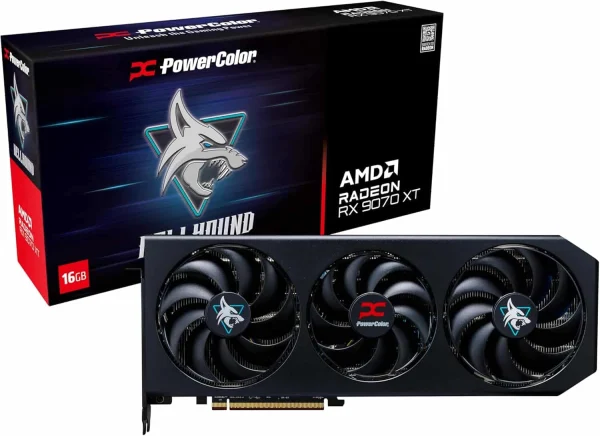
PowerColor RX 9070 XT Hellhound
Upgrade to the PowerColor RX 9070 XT Hellhound and get AMD Radeon RX 9070 XT performance…
RX 9070 XT FAQ
Is the 9070 XT good for 4K?
Yes, with upscaling. Its 16 GB of memory handles 4K textures, and FSR helps hold frame rates up. AMD’s own product page shows its 4K test results. For native 4K with heavy ray tracing, a higher-tier card has more headroom.
How much VRAM does the 9070 XT have?
It has 16 GB of GDDR6 on a 256-bit bus, with up to 640 GB/s of bandwidth and 64 MB of Infinity Cache, according to AMD.
What power supply does the 9070 XT need?
AMD recommends 750 W for the 304 W card. A quality 750 W unit works, and 850 W adds headroom.
Does the 9070 XT support FSR 4?
Yes. FSR 4’s machine-learning upscaling launched exclusively on the RX 9000 Series, and AMD’s current FSR Redstone suite is listed as supported on this card. Check per-game support for each feature.
Is the RX 9070 XT price still worth it?
At its $599 launch price it was a strong value. In 2026, street prices are well above that because of the memory shortage, so compare it with the RTX 5070 Ti at today’s prices. The wider the gap, the better the AMD card looks.
The Bottom Line
The RX 9070 XT is a strong value pick for high-refresh 1440p and upscaled 4K: 16 GB of memory, FSR 4 machine-learning upscaling and simple 8-pin power, at a launch price $150 below its NVIDIA rival. Choose it when the price gap is real and you don’t need NVIDIA-only features like DLSS Multi Frame Generation or CUDA.
Browse every model on our graphics card page, or ask our builders at sales@luxvibepcs.com or through our contact form. We ship from Oshkosh, Wisconsin to the USA and worldwide.