The RTX 5070 Ti is the value sweet spot of NVIDIA’s RTX 50 lineup. It has the same 16 GB of GDDR7 and 256-bit memory bus as the card above it, about 83% of its CUDA cores, and it launched at $749, a full $250 less. For most gamers on high-refresh monitors, that’s the best balance of price, power and features NVIDIA offers.
Our build team walks through the specs, the honest value case, how it compares with the cards around it, what resolution it suits, what it costs in 2026, and how to build around it.
In This Guide
RTX 5070 Ti Specs at a Glance
The NVIDIA RTX 5070 Ti launched in February 2025 at a $749 US MSRP. It’s a full Blackwell card with 5th-gen Tensor cores, 4th-gen RT cores and PCIe 5.0. These numbers come from NVIDIA’s official RTX 5070 family page and its GeForce compare page.
| Spec | GeForce RTX 5070 Ti |
|---|---|
| CUDA cores | 8,960 |
| Boost clock | 2.45 GHz |
| Memory | 16 GB GDDR7, 256-bit |
| Memory bandwidth | 896 GB/s |
| AI performance | 1,406 AI TOPS |
| Video engines | 2x 9th-gen NVENC, 1x 6th-gen NVDEC |
| Total graphics power | 300 W |
| Required system power | 750 W |
| Power connector | 16-pin PCIe Gen 5 (300 W or greater), or 2x 8-pin via adapter |
| Outputs | 3x DisplayPort 2.1b, 1x HDMI 2.1b |
The line that matters most is memory. The 5070 Ti shares its 16 GB capacity and 256-bit bus with the RTX 5080, while the regular RTX 5070 drops to 12 GB on a 192-bit bus. That gap is the main reason this card is likely to age better than the one below it.
Why the 5070 Ti Is the Value Pick
We don’t publish invented benchmarks, so here’s the value case in spec ratios against the RTX 5080, using launch MSRPs:
- 83% of the CUDA cores (8,960 vs 10,752);
- 93% of the memory bandwidth (896 vs 960 GB/s);
- 100% of the memory capacity (16 GB on both);
- the same two 9th-gen NVENC encoders for streaming and exports;
- 75% of the price ($749 vs $999) and 60 W less power.
You give up some raw GPU power and a little bandwidth, but you keep the memory, the encoders and the full RTX 50 feature set. Games rarely scale perfectly with core count, so treat these ratios as a rough guide rather than a frame-rate forecast. On paper, though, the cheaper card gives you more GPU per dollar, which is exactly what a value pick should do.
One caution: those ratios use launch MSRPs. With 2026 street prices moving independently for each model, the real gap between the two cards can be wider or narrower than $250. Compare the current prices side by side before you decide. If the gap shrinks, the bigger card gets more tempting; if it widens, the 5070 Ti looks even better.
How It Compares With Its Neighbors
| Spec | RTX 5070 | RTX 5070 Ti | RTX 5080 | RX 9070 XT |
|---|---|---|---|---|
| Cores | 6,144 CUDA | 8,960 CUDA | 10,752 CUDA | 4,096 stream processors |
| Memory | 12 GB GDDR7 | 16 GB GDDR7 | 16 GB GDDR7 | 16 GB GDDR6 |
| Bus / bandwidth | 192-bit | 256-bit, 896 GB/s | 256-bit, 960 GB/s | 256-bit, 640 GB/s |
| Board power | 250 W | 300 W | 360 W | 304 W |
| Recommended PSU | 650 W | 750 W | 850 W | 750 W |
| Launch price | $549 | $749 | $999 | $599 |
Versus the RTX 5070: about 46% more CUDA cores, 4 GB more memory, a wider bus and twice the NVENC encoders, for $200 more at launch. If you plan to keep the card for years or play at high resolutions, the step up is worth it.
Versus the RTX 5080: the bigger card has 20% more CUDA cores and higher clocks, which counts most at 4K. Our 5080 vs 5070 Ti comparison helps you decide whether that’s worth $250 at MSRP.
Versus AMD’s rival: AMD positioned the Radeon RX 9070 XT directly against this card at $150 less. NVIDIA counters with faster GDDR7, Multi Frame Generation, DLSS 5 and NVENC. Our 9070 XT vs 5070 Ti guide covers that matchup in depth.
What Resolution and Refresh Rate It Suits
NVIDIA runs its RTX 5070 family performance charts at 1440p, max settings, with DLSS Super Resolution and Ray Reconstruction on. That tells you where the card is meant to live:
- 1440p high refresh: the home turf. It’s a strong match for high-refresh monitors, with ray tracing on and DLSS doing part of the work.
- 4K with DLSS: very playable when you lean on upscaling and frame generation, and 16 GB of memory gives it room for 4K textures.
- Native 4K with path tracing: this is where a 5080 or 5090 earns its price; the Ti will need more help from DLSS.
- 1080p: mostly overkill unless you chase very high esports frame rates, where the CPU matters more.
If 1440p is your target, our guide to the best GPU for 1440p compares every realistic option, and a ready-made 1440p gaming PC is the simplest way to get there.
DLSS, Streaming and Creator Features
The 5070 Ti gets the same RTX 50 software stack as the flagship. That includes Multi Frame Generation from DLSS 4, which NVIDIA says can generate up to five frames per rendered frame, Dynamic Multi Frame Generation from DLSS 4.5, and DLSS 5 neural rendering, which launched on RTX 50 cards only in September 2026.
Frame generation smooths motion, but responsiveness still follows the frames the GPU renders, so it works best on a solid base frame rate. For creators, two 9th-gen NVENC encoders handle streaming in OBS and fast exports well. The one trade-off is a single NVDEC decoder versus two on the 5080, which matters mainly for heavy multi-stream video editing.
RTX 5070 Ti Price in 2026
At launch, the RTX 5070 Ti was $749 US MSRP. In 2026, a global DRAM and GDDR7 shortage driven by AI data-center demand has pushed street prices well above that, as it has for every graphics card. Current numbers change week to week, so check today’s 5070 Ti price on each model in our graphics card range.
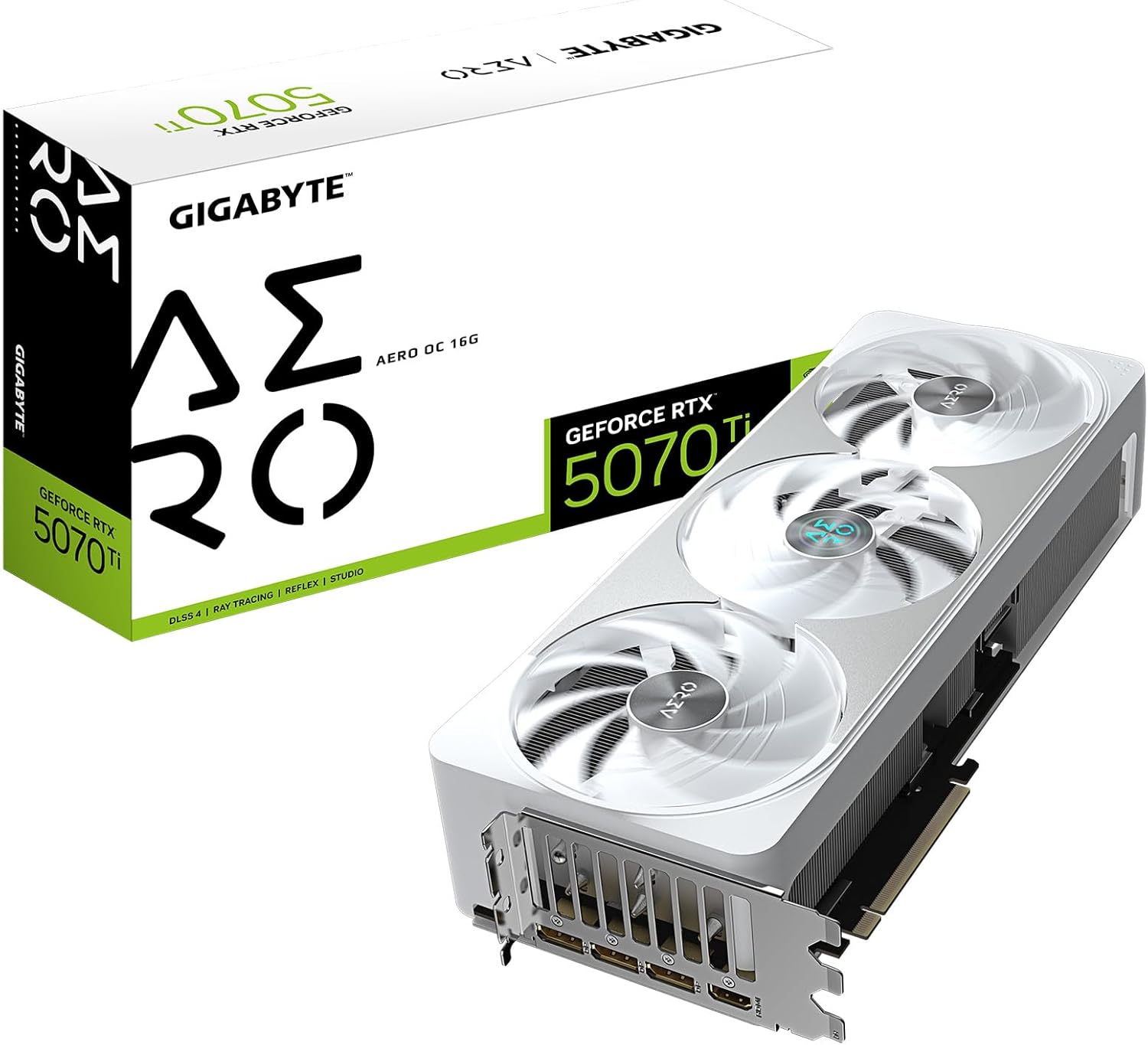
Every version shares the same 8,960 CUDA cores and 16 GB of memory. Partner models differ in cooling, noise, clocks, size and looks. In our range you’ll find compact SFF versions such as the GIGABYTE RTX 5070 Ti WINDFORCE OC SFF 16G, the white GIGABYTE RTX 5070 Ti AERO OC 16G White, and premium cards like the ASUS ROG Strix RTX 5070 Ti OC Edition 16G.
Choosing a Card and Building Around It
At 300 W total graphics power, this card is easy to power and cool. NVIDIA lists 750 W of required system power, and the card takes one 16-pin PCIe Gen 5 cable rated 300 W or more, or two 8-pin cables through the included adapter.
- Power supply: a quality 750 W unit is the baseline; 850 W adds comfortable headroom.
- CPU: a gaming chip like the Ryzen 7 9800X3D or 7800X3D keeps high-refresh 1440p smooth.
- Memory: 32 GB of DDR5 is the standard for a new gaming PC in 2026.
- Case: check GPU length; the SFF models suit compact cases.
Every Luxvibe PC is hand-built to order, and upgrades and changes are always possible before we build.
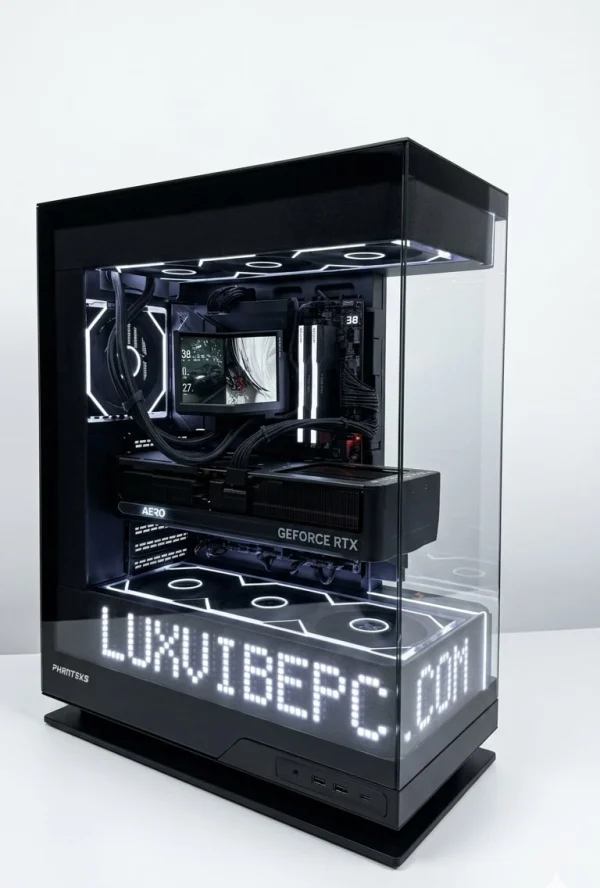
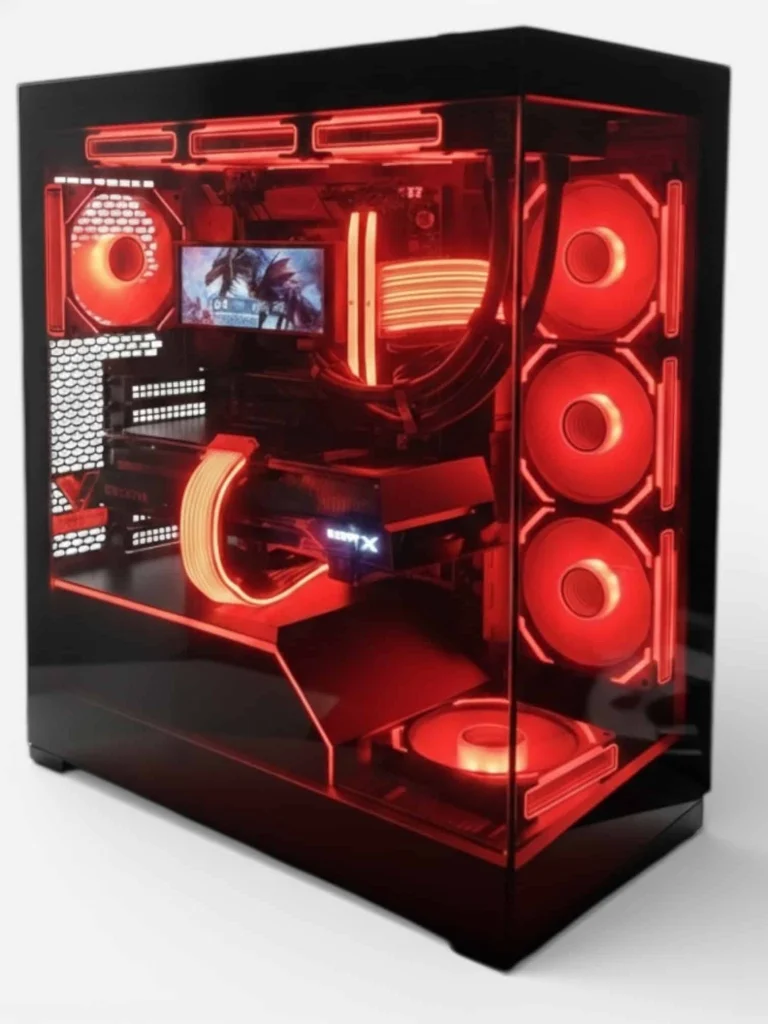
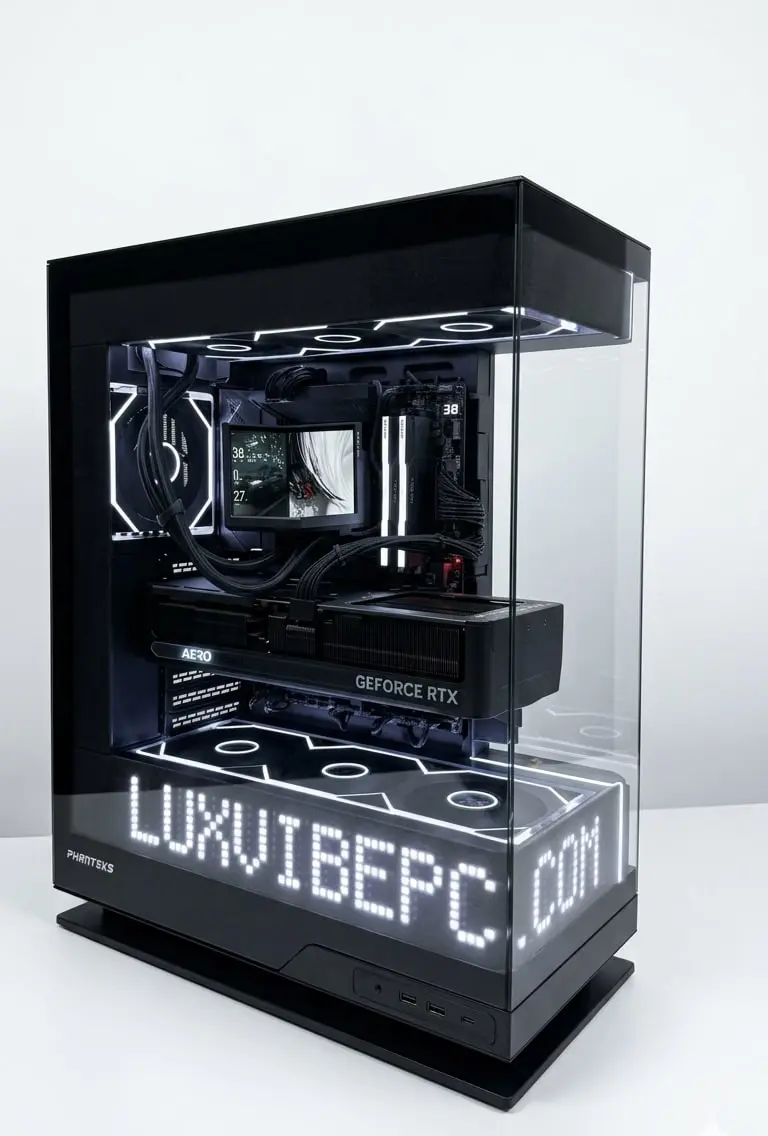
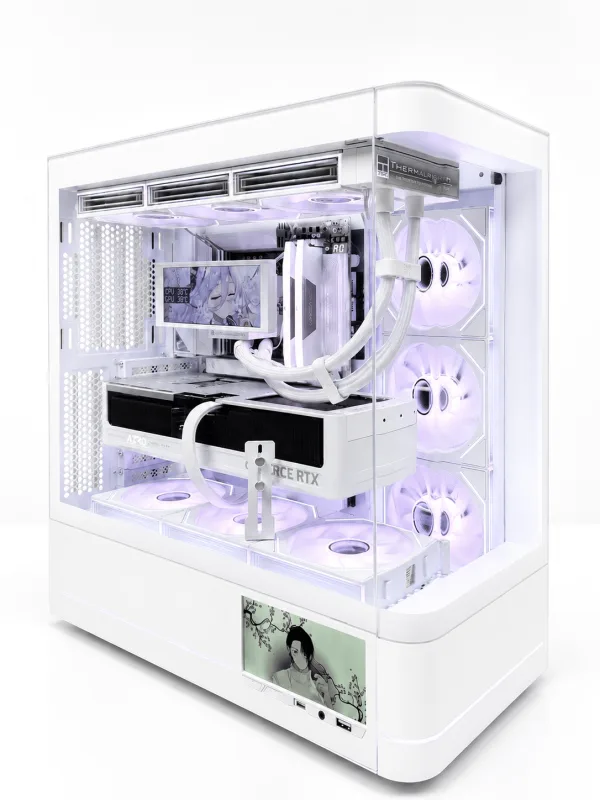
LUX Matrix 5070ti
- GPURTX 5070 Ti
- CPURyzen 7 9800X3D
- RAM32GB DDR5
- SSD2TB NVMe
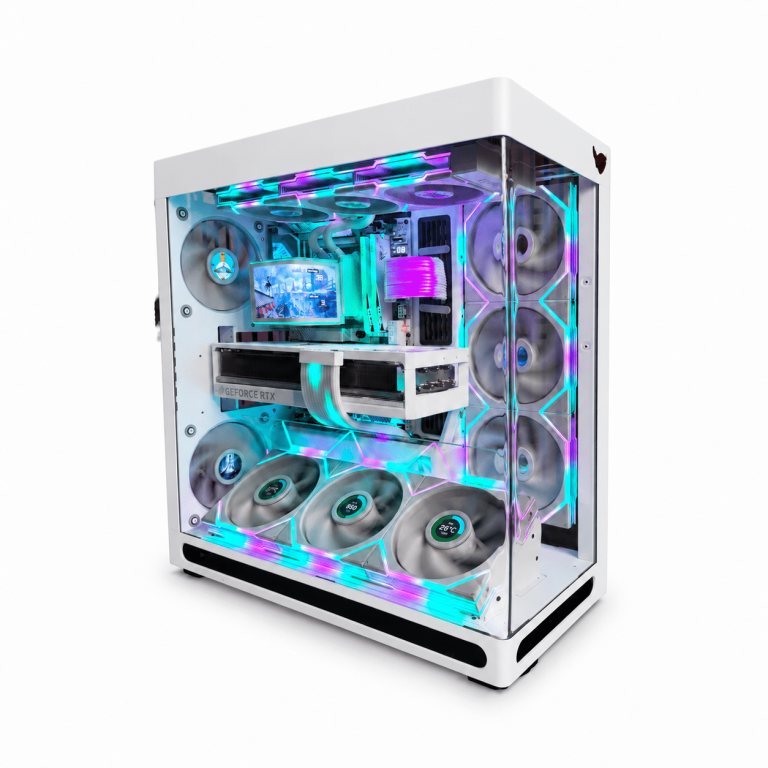
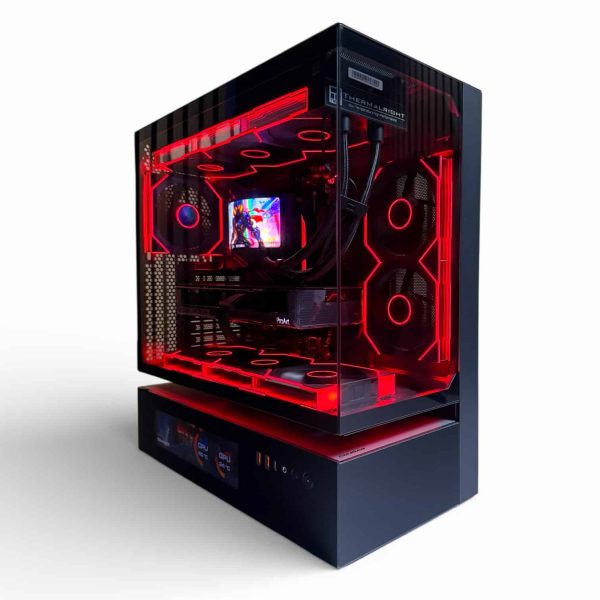
LUX Optic ICE 5070 TI
- GPURTX 5070 Ti
- CPURyzen 7 9800X3D
- RAM32GB DDR5
- SSD2TB NVMe
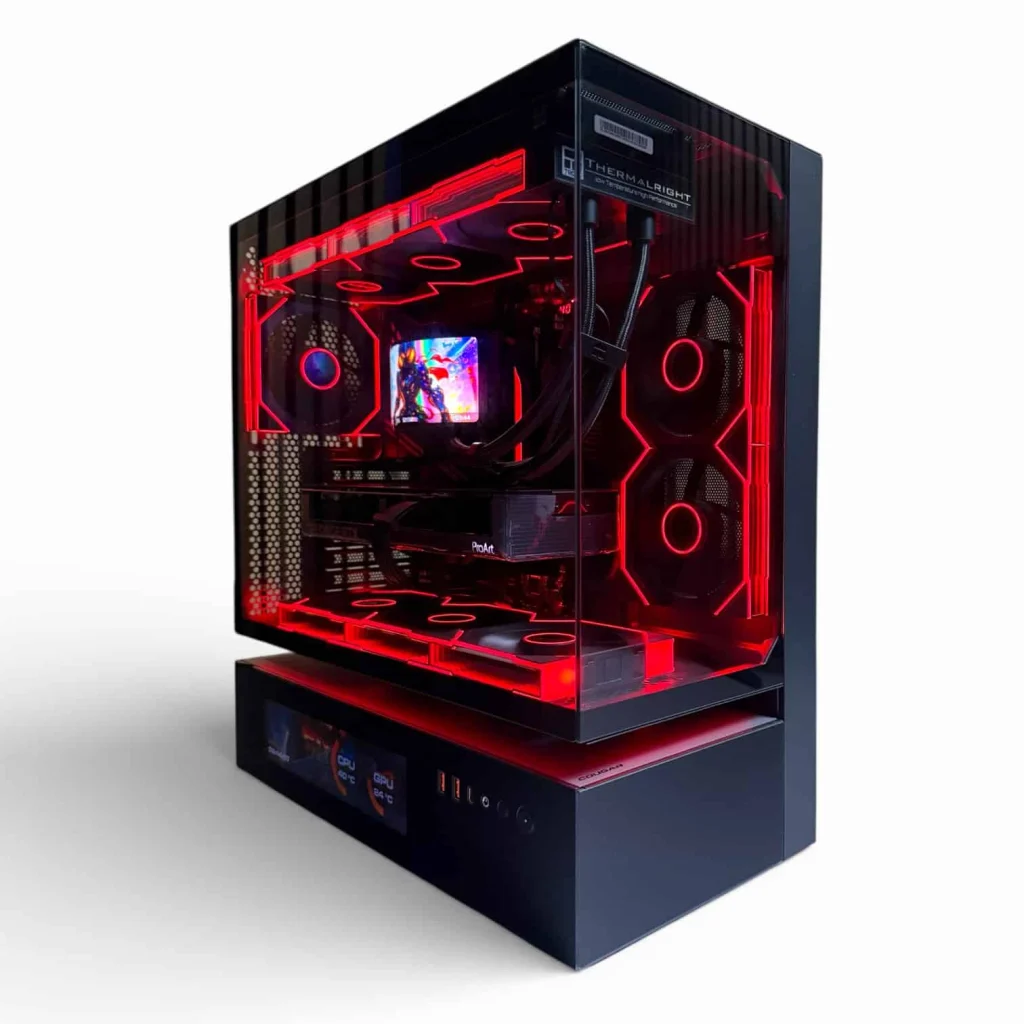
LUX Floating 5070ti
- GPURTX 5070 Ti
- CPURyzen 7 9800X3D
- RAM32GB DDR5
- SSD2TB NVMe
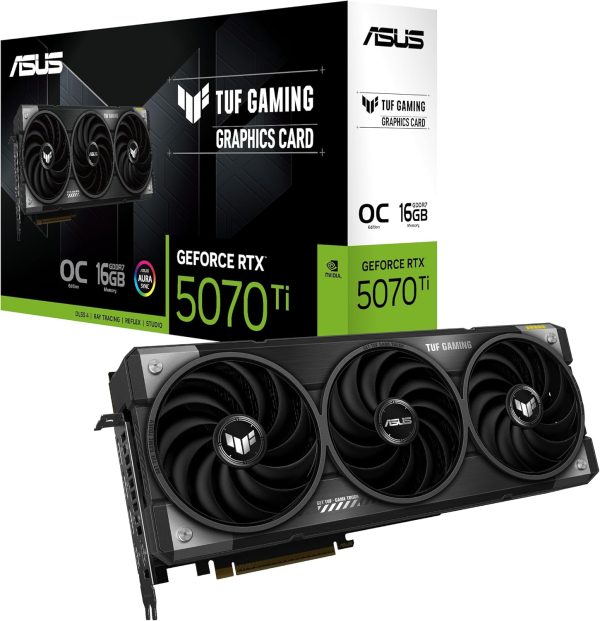
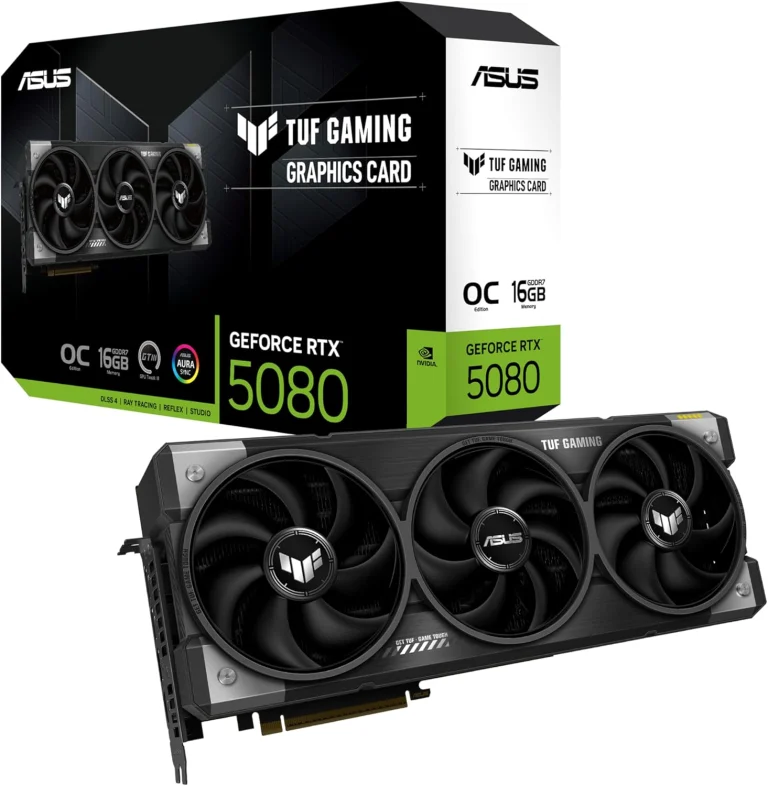
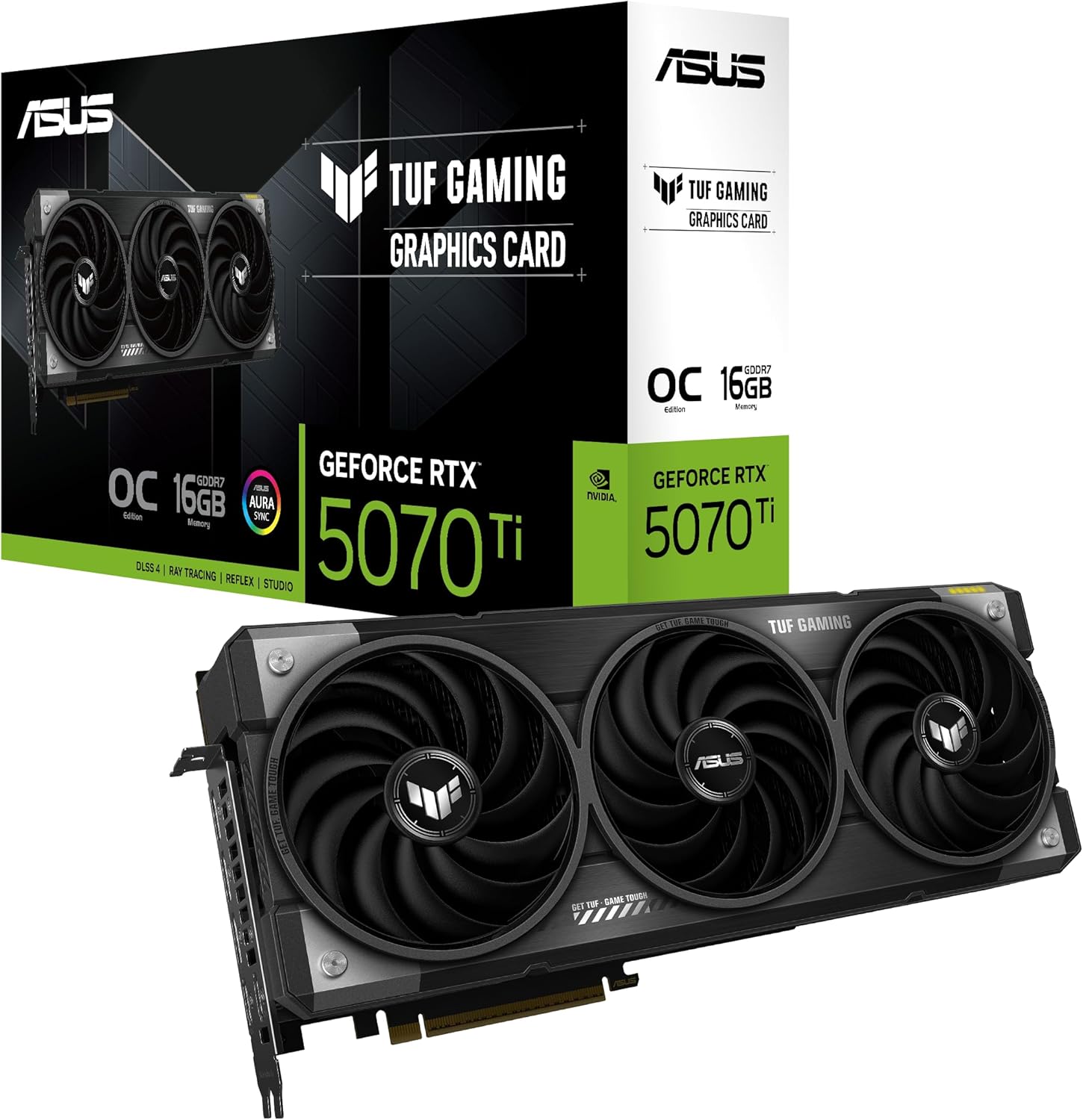
ASUS TUF Gaming GeForce RTX 5070 Ti 16GB GDDR7 OC Edition Gaming
The ASUS TUF Gaming RTX 5070 Ti 16GB GDDR7 OC puts NVIDIA GeForce RTX 5070 Ti…
RTX 5070 Ti FAQ
Is the 5070 Ti good for 4K?
Yes, with DLSS. Its 16 GB of memory handles 4K textures, and upscaling plus frame generation do the heavy lifting. For native 4K with path tracing, a 5080 or 5090 has more headroom.
How much VRAM does the 5070 Ti have?
The NVIDIA RTX 5070 Ti has 16 GB of GDDR7 on a 256-bit bus with 896 GB/s of bandwidth, the same capacity as the RTX 5080 and 4 GB more than the RTX 5070.
What power supply does a 5070 Ti need?
NVIDIA lists 750 W of required system power for a 300 W card. A quality 750 W unit works, and 850 W adds headroom for a hungrier CPU.
Is the Ti worth it over the regular 5070?
For most buyers, yes. You get about 46% more CUDA cores, 16 GB instead of 12 GB, and a second NVENC encoder for $200 more at launch MSRP.
Is the 5070 Ti good for streaming?
Yes. It has two 9th-gen NVENC encoders, the same count as the RTX 5080, and OBS Studio supports NVENC, including AV1 encoding on RTX 40 and 50 cards. That lets you game and stream from one PC without leaning on the CPU for encoding.
The Bottom Line
The RTX 5070 Ti is the RTX 50 card we’d point most gamers to first. It keeps the 16 GB memory, encoders and full DLSS feature set of the 5080 for 75% of its launch price, and it’s at home on high-refresh 1440p monitors and capable at 4K with DLSS. Step up only if native 4K with path tracing is your priority.
Browse every model on our graphics card page, or ask our builders at sales@luxvibepcs.com or through our contact form. We ship from Oshkosh, Wisconsin to the USA and worldwide.