The best GPU for 4K gaming in 2026 is NVIDIA’s GeForce RTX 5090: with 21,760 CUDA cores and 32 GB of GDDR7, it has more shader hardware and more memory than any other GeForce card. For most buyers, though, the RTX 5080 is the better balance of price and performance, while the RTX 5070 Ti and AMD’s Radeon RX 9070 XT are the realistic entry points if you lean on upscaling.
Below, our builders rank each GPU for 4K gaming, explain which specs actually matter at 3840 x 2160, and cover the power supply and platform every option needs.
In This Guide
Quick Picks: Best GPU for 4K Gaming by Budget
Here is how we rank each graphics card for 4K play at its price point.
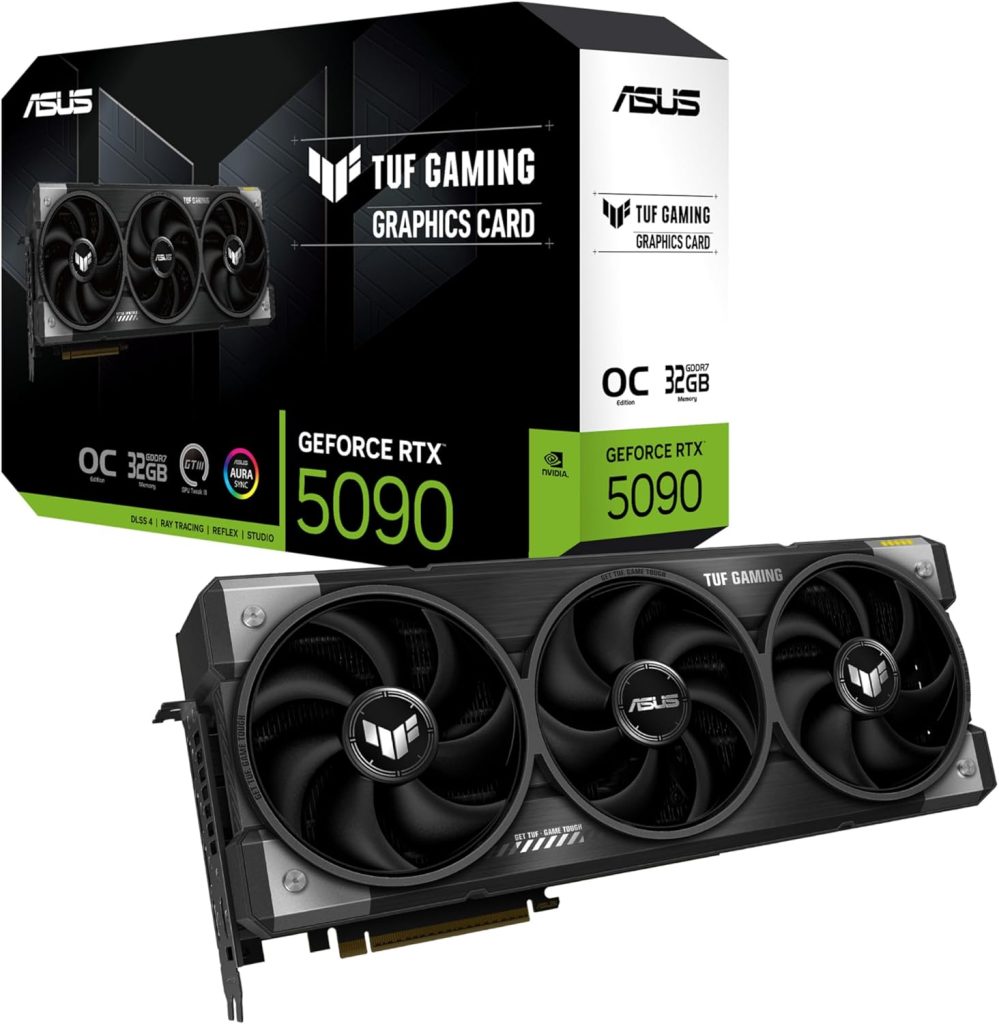
- Best overall: RTX 5090. The only card our builders recommend for native 4K with heavy ray tracing and every slider maxed. Launch MSRP $1,999.
- Best balance: RTX 5080. 16 GB of GDDR7 and DLSS 4 Multi Frame Generation make it a strong high-refresh 4K card at half the flagship’s launch price ($999).
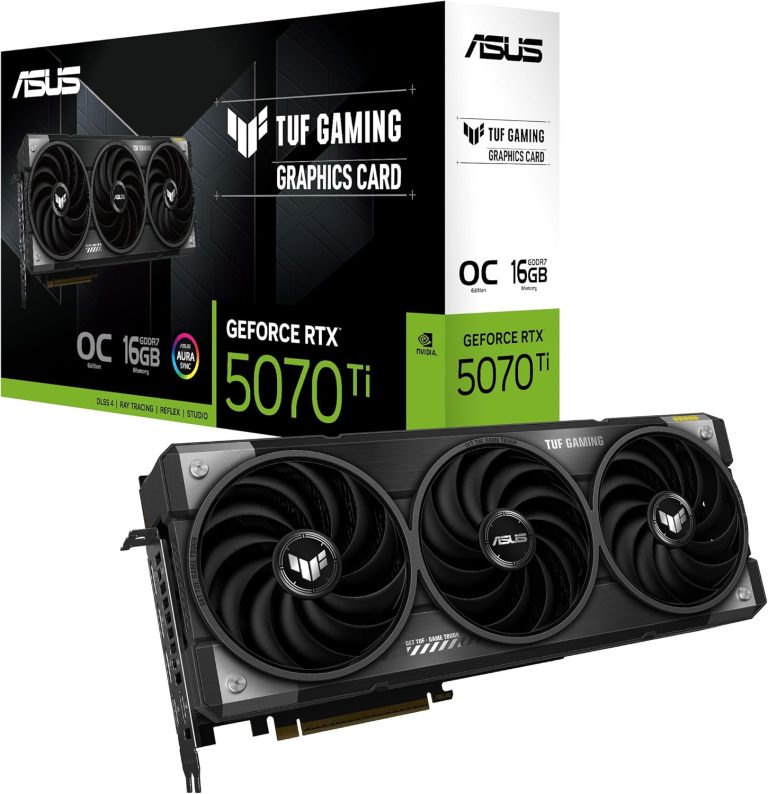
- Best NVIDIA entry point: RTX 5070 Ti. Same 16 GB and 256-bit bus as the 5080 with fewer cores. Launch MSRP $749.
- Best AMD option: RX 9070 XT. 16 GB of GDDR6 and FSR 4 at a $599 launch price.
A note on pricing: street prices for all of these are well above MSRP in 2026 because of the global memory shortage. Our product pages show current prices.
What Makes a Good GPU for 4K Gaming
4K UHD is 8,294,400 pixels per frame, 2.25 times as many as 1440p. Every spec below affects how well a card copes with that load.
- Shader count. CUDA cores (NVIDIA) and stream processors (AMD) do the rendering. More cores within the same architecture means more pixels pushed per second.
- VRAM capacity. High-resolution textures, ray tracing and frame generation all consume memory. Our builders treat 16 GB as the floor for a new GPU for 4K gaming in 2026.
- Memory bandwidth. A wider bus feeds the cores faster. The RTX 5090’s 512-bit bus is twice as wide as the 256-bit bus on the 5080, 5070 Ti and 9070 XT.
- Upscaling and frame generation. DLSS and FSR let a card render at a lower internal resolution and reconstruct a 4K image. NVIDIA says Multi Frame Generation, exclusive to RTX 50 Series, can generate up to five frames per rendered frame.
- Display outputs. RTX 50 Series cards support DisplayPort 2.1b (UHBR20) and HDMI 2.1b, with a maximum output NVIDIA rates at 4K 480 Hz with DSC.
- Power and size. Bigger cards need bigger power supplies, more airflow and longer case clearance.
4K Graphics Card Specs Compared
Here are the four cards we recommend as a GPU for 4K gaming, plus the RTX 4090 for context. All figures come from NVIDIA’s GeForce comparison page and AMD’s official product pages.
| Spec | RTX 5090 | RTX 5080 | RTX 5070 Ti | RX 9070 XT | RTX 4090 |
|---|---|---|---|---|---|
| Shaders | 21,760 CUDA | 10,752 CUDA | 8,960 CUDA | 4,096 SP (64 CUs) | 16,384 CUDA |
| VRAM | 32 GB GDDR7 | 16 GB GDDR7 | 16 GB GDDR7 | 16 GB GDDR6 | 24 GB GDDR6X |
| Memory bus | 512-bit | 256-bit | 256-bit | 256-bit | 384-bit |
| Board power | 575 W | 360 W | 300 W | 304 W | 450 W |
| Vendor PSU guidance | 1,000 W | 850 W | 750 W | 750 W | 850 W |
| AI upscaling | DLSS 5, Multi Frame Gen | DLSS 5, Multi Frame Gen | DLSS 5, Multi Frame Gen | FSR 4 (FSR Redstone) | DLSS 3 Frame Gen |
| Launch MSRP | $1,999 | $999 | $749 | $599 | $1,599 |
Shader counts are not directly comparable between NVIDIA and AMD architectures, so use them to compare cards within the same brand.
The Flagship: Best Graphics Card for 4K Gaming Without Limits
The RTX 5090 has roughly twice the CUDA cores of the RTX 5080 (21,760 vs. 10,752), twice the VRAM and twice the bus width. It also carries 3,352 AI TOPS versus 1,801 on the 5080, which matters for DLSS and for creative AI tools. If you want a GPU for 4K gaming at native resolution with path tracing, or one that can feed a 4K monitor at 240 Hz and up, this is the card.
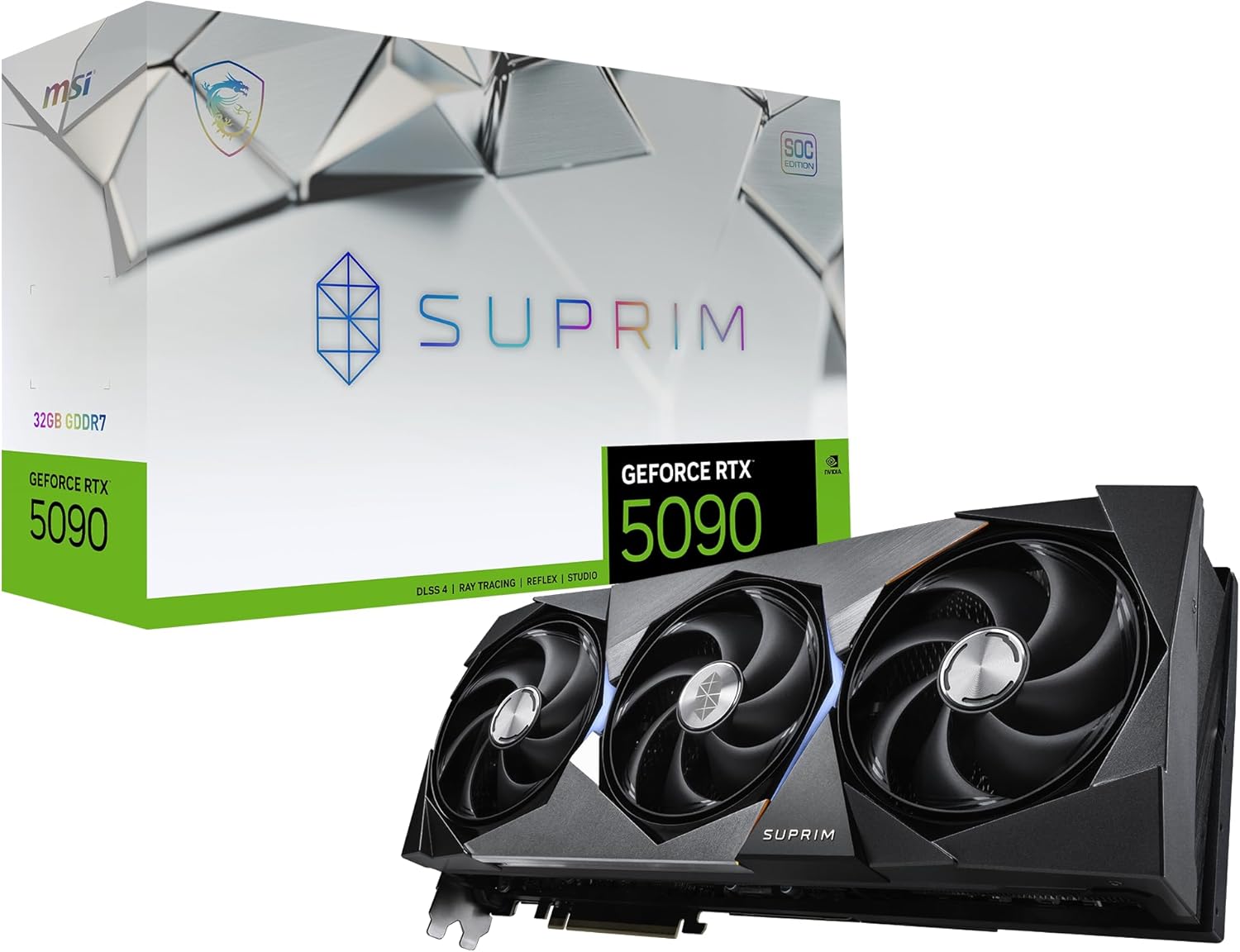
The tradeoffs are real:
- Power: 575 W total graphics power, and NVIDIA lists 1,000 W of required system power.
- Connector: a 16-pin 12V-2×6 PCIe Gen 5 cable or a 4x 8-pin adapter, so the cable must be fully seated.
- Cost: the $1,999 launch MSRP was already steep, and 2026 street prices sit well above it.
It also has three 9th-gen NVENC encoders, so streamers and video editors get extra value. For a deeper look at whether the flagship earns its premium, see our RTX 5080 vs 5090 breakdown, or browse a complete RTX 5090 gaming PC.
The High-Refresh Sweet Spot
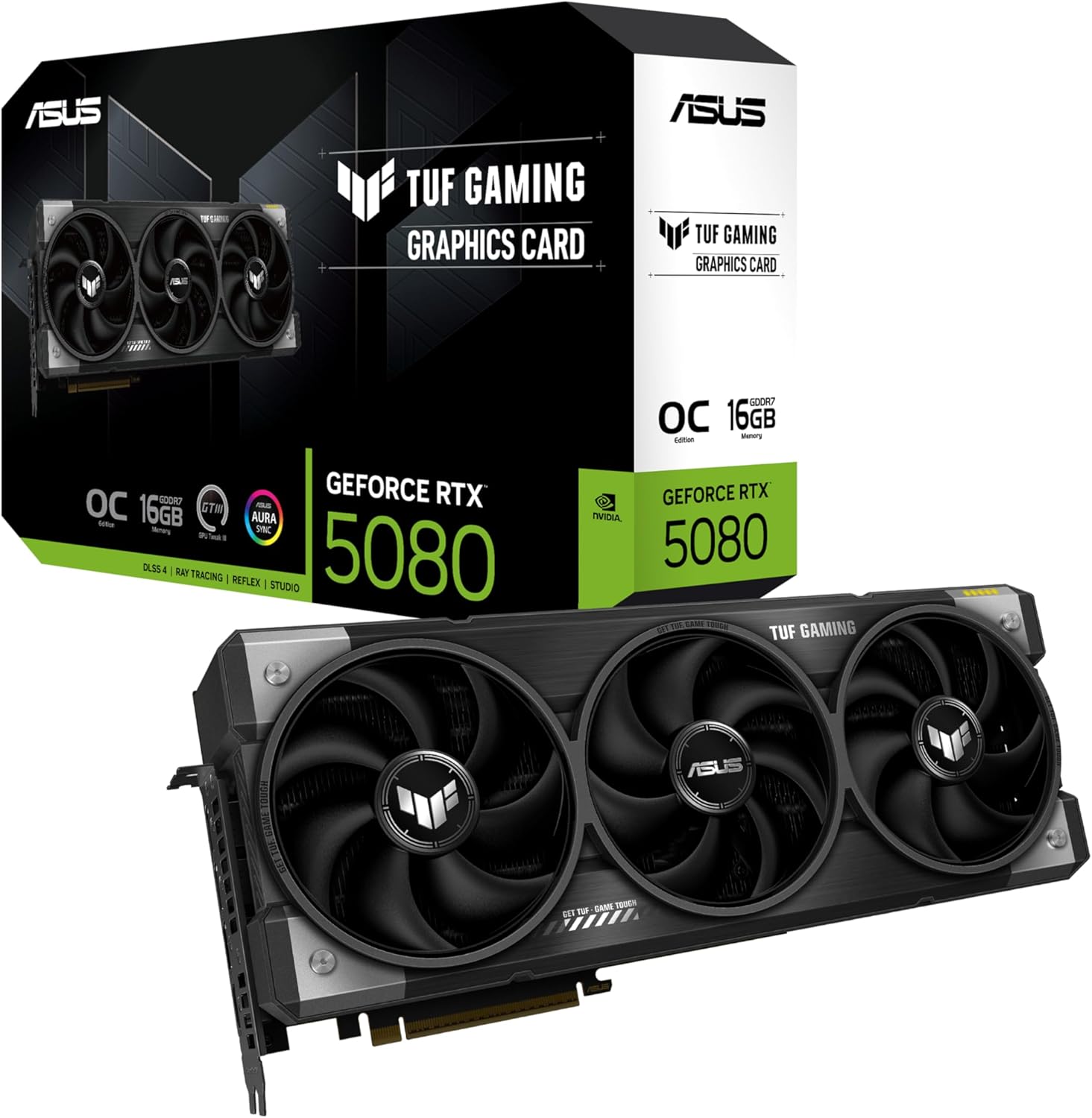
For most people shopping for a GPU for 4K gaming, the RTX 5080 is where our builders land. It pairs 10,752 CUDA cores with 16 GB of GDDR7 on a 256-bit bus, draws 360 W, and NVIDIA lists 850 W of required system power. That is far easier to cool and power than the 5090.
With DLSS Super Resolution and Multi Frame Generation, the 5080 makes high-refresh 4K practical in demanding games. It has two 9th-gen NVENC encoders for streaming and recording, too.
Waiting for an RTX 5080 Super? NVIDIA has not announced one. Reports in 2026 say the RTX 50 Super refresh was delayed or put on hold because of the GDDR7 shortage, so there is no date to plan around. Buy based on what exists today.
16 GB Contenders: 4K on a Tighter Budget
Both cards carry 16 GB of VRAM on a 256-bit bus, which is why they make our list and the 12 GB RTX 5070 does not. Expect to use upscaling and tune settings in the heaviest games.
The NVIDIA option
The RTX 5070 Ti has 8,960 CUDA cores, 16 GB of GDDR7, 300 W total graphics power and a 750 W system recommendation. You get the full DLSS 4 feature set, including Multi Frame Generation, plus DLSS 5 support. For a GPU for 4K gaming under the flagship tier, it is the safest NVIDIA pick.
The AMD option
The RX 9070 XT has 64 compute units (4,096 stream processors), 16 GB of GDDR6 with up to 640 GB/s of bandwidth, 64 MB of Infinity Cache, 304 W typical board power and a 750 W PSU recommendation. AMD positioned it against the RTX 5070 Ti and lists 4K Ultra results from its own lab testing on the RX 9070 XT product page. FSR 4 machine-learning upscaling launched exclusive to RX 9000 cards.
Which one is right depends on the games you play and how much you value NVIDIA’s frame generation versus AMD’s lower launch price. Our RX 9070 XT vs RTX 5070 Ti comparison digs into that choice.
ASUS TUF Gaming RTX 5090
Upgrade to the ASUS TUF Gaming RTX 5090 and get NVIDIA GeForce RTX 5090 performance for…
ASUS TUF Gaming RTX 5080
The ASUS TUF Gaming RTX 5080 puts NVIDIA GeForce RTX 5080 power into your desktop. It…
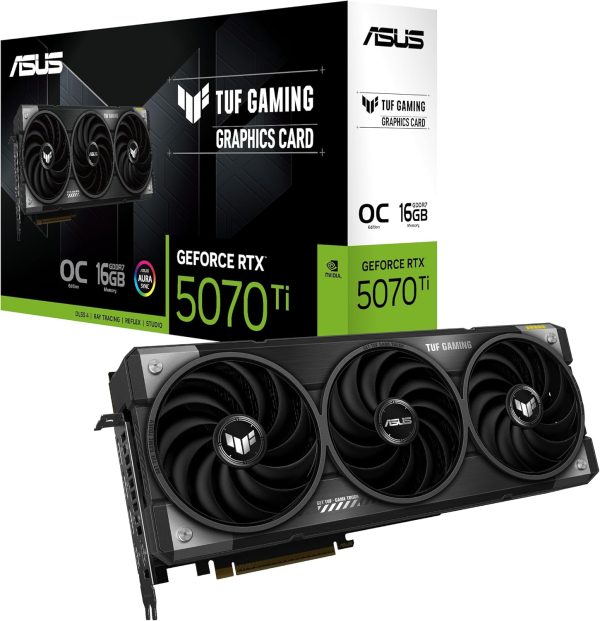
ASUS TUF Gaming GeForce RTX 5070 Ti 16GB GDDR7 OC Edition Gaming
The ASUS TUF Gaming RTX 5070 Ti 16GB GDDR7 OC puts NVIDIA GeForce RTX 5070 Ti…
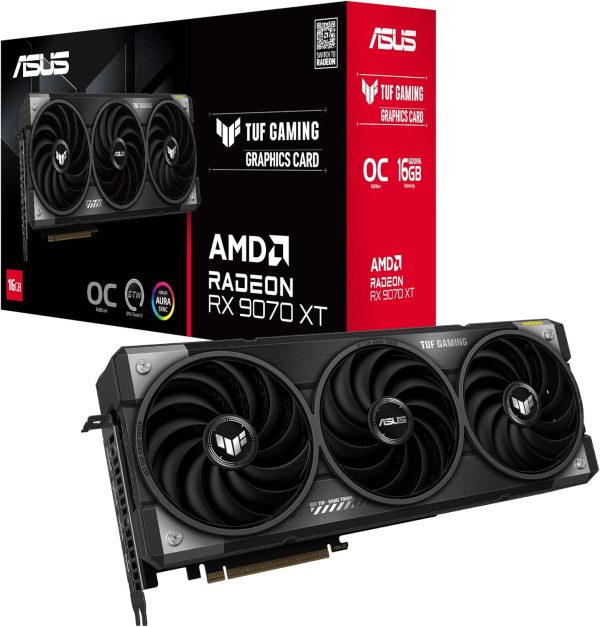
ASUS TUF Gaming RX 9070 XT
The ASUS TUF Gaming RX 9070 XT puts AMD Radeon RX 9070 XT power into your…
What About the RTX 4090?
The RTX 4090 launched in October 2022 at $1,599 with 16,384 CUDA cores and 24 GB of GDDR6X. It remains a capable GPU for 4K gaming, and it supports DLSS Frame Generation. It does not support Multi Frame Generation, and DLSS 5 launched on RTX 50 Series only (NVIDIA says RTX 40 support is planned later).
If you already own one, there is little reason to change unless you want the 5090’s extra headroom. If you are buying new in 2026, the RTX 50 Series is where our builders focus.
Building Around Your 4K Card
Even the best graphics card for 4K gaming needs a balanced system around it:
- CPU: At 4K the GPU is usually the bottleneck, but a fast gaming CPU still steadies frame pacing. The Ryzen 7 9800X3D and 9850X3D (8 cores, 96 MB of L3 cache each) are our go-to chips.
- Memory: 32 GB of DDR5 is the 2026 standard. DDR5-6000 EXPO kits are the common sweet spot on AM5.
- Power supply: Follow the vendor guidance above and leave headroom for the CPU and the rest of the system.
- Case and cooling: A 360 W to 575 W card dumps a lot of heat into the case, so front-to-back airflow matters.
- Monitor: Match the panel to the card. Our guide to the best 4K gaming monitor covers refresh rates, HDR tiers and DisplayPort 2.1.
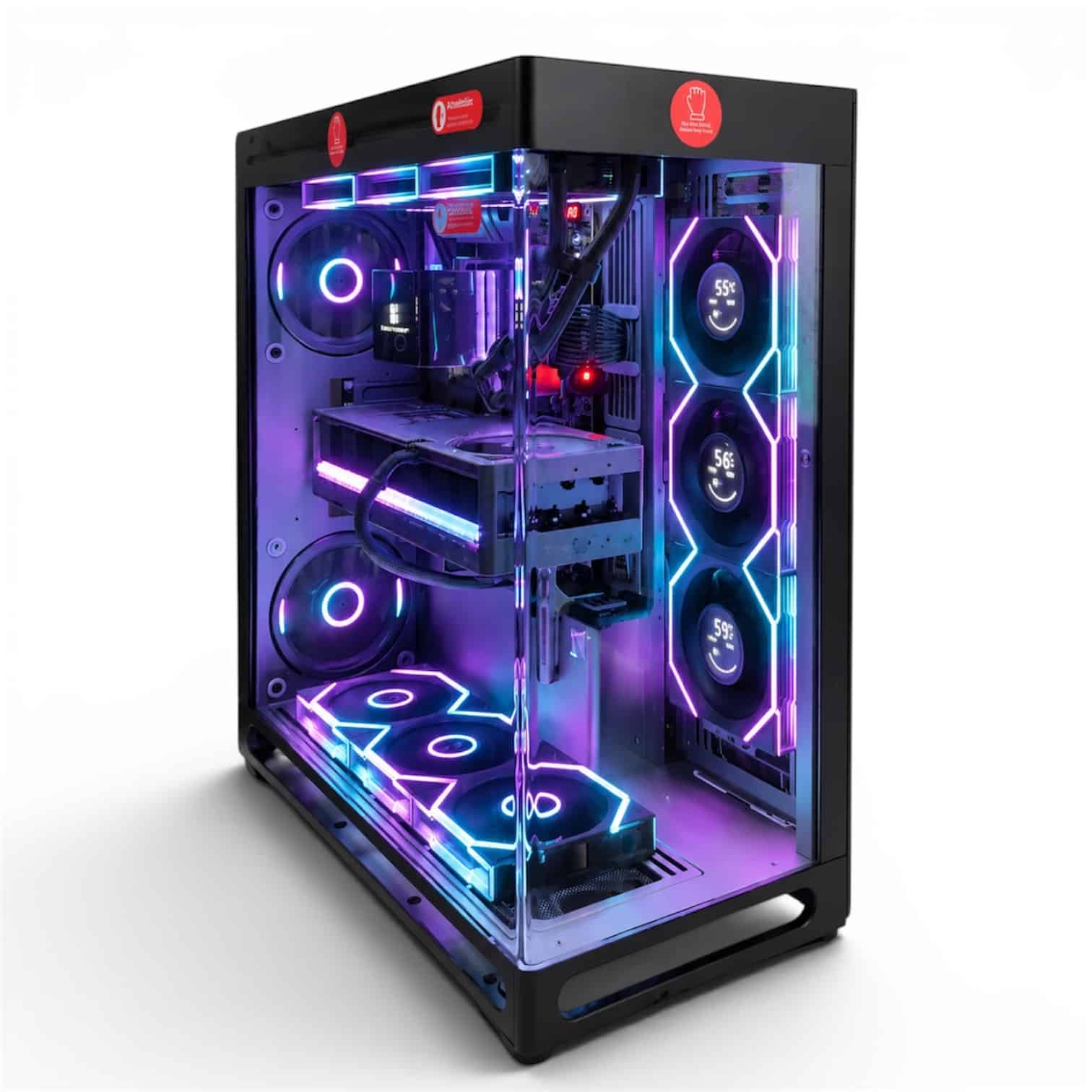
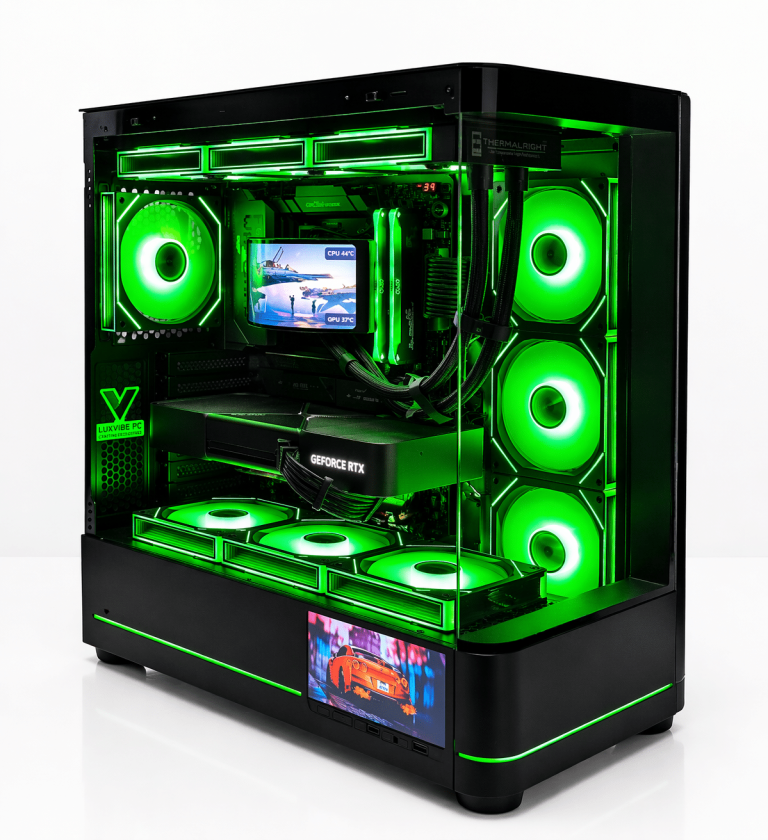
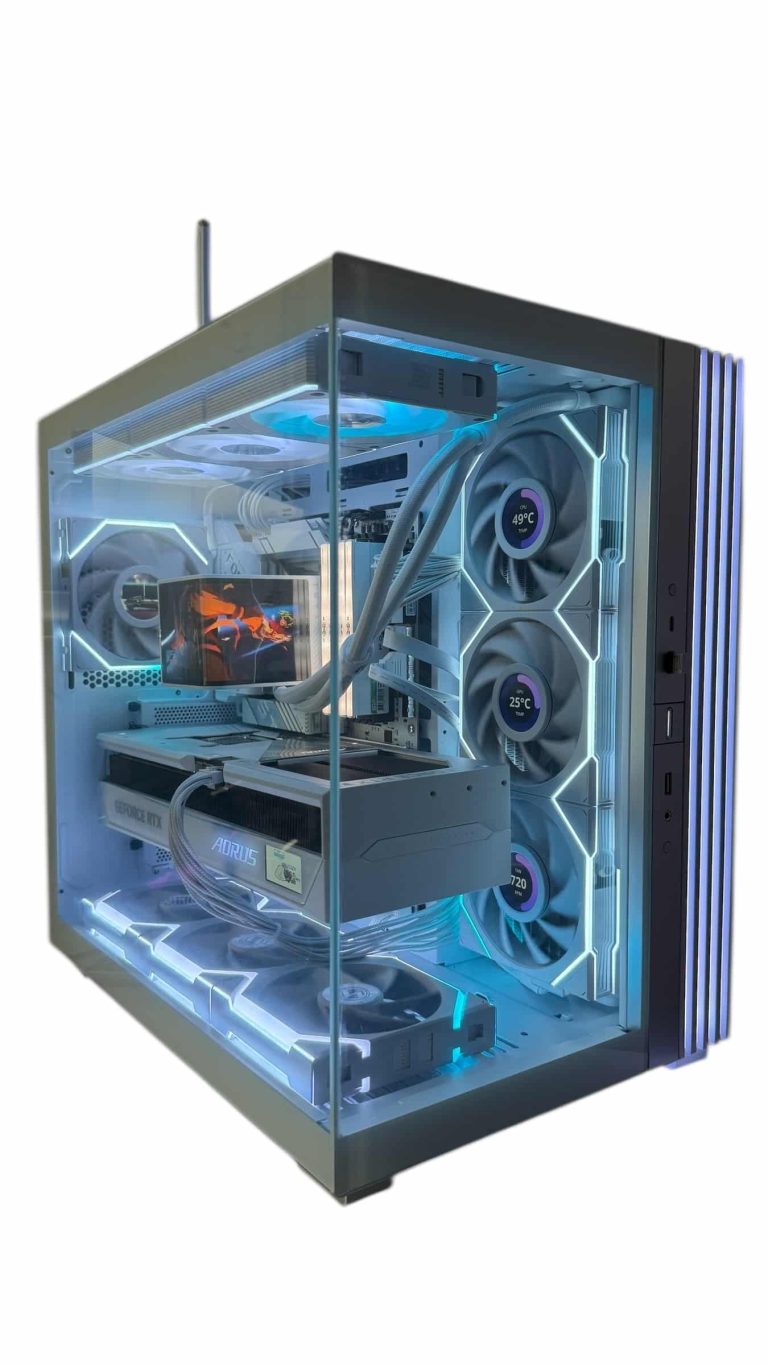
If you would rather skip the parts list entirely, every 4K gaming PC we sell is hand-built to order, and upgrades and changes are always possible before we build.
Best GPU for 4K Gaming FAQ
What is the best graphics card for 4K gaming on a budget?
The RX 9070 XT ($599 launch MSRP) and RTX 5070 Ti ($749) are the most affordable cards we recommend for 4K, since both have 16 GB of VRAM. Expect to use FSR 4 or DLSS in demanding titles, and check current prices, which sit well above MSRP in 2026.
How much VRAM does a GPU for 4K gaming need?
We recommend at least 16 GB for a new card. That covers the RTX 5080, RTX 5070 Ti and RX 9070 XT. The RTX 5090’s 32 GB gives the most headroom for path tracing, mods and creative work.
Do you need the flagship for 4K?
No. With 16 GB of GDDR7, DLSS Super Resolution and Multi Frame Generation, the RTX 5080 is a very capable GPU for 4K gaming and our most common recommendation. Choose the RTX 5090 if you want native 4K with maximum ray tracing.
Should I wait for a Super refresh?
NVIDIA has not announced an RTX 5080 Super or any RTX 50 Super card. Reports say the refresh was delayed or shelved because of the GDDR7 shortage, with no date. We suggest buying what is available now.
Is AMD or NVIDIA the better GPU for 4K gaming?
AMD positioned the RX 9070 XT against the RTX 5070 Ti, not the 5080 or 5090, so for high-end 4K our builders choose NVIDIA. At the entry level, the RX 9070 XT is a strong alternative with a lower launch price.
The Bottom Line
If budget is no object, the RTX 5090 is the best GPU for 4K gaming, full stop. For most players, the RTX 5080 is the smarter choice: the best graphics card for 4K gaming once you weigh price and power draw. If you are entering 4K on a tighter budget, choose between the RTX 5070 Ti and RX 9070 XT, both with 16 GB of VRAM.
Want help choosing? Browse our graphics cards or complete 4K systems, or email a real builder at sales@luxvibepcs.com or use our contact form. We ship across the USA from Oshkosh, Wisconsin.