The 9070 XT vs 5070 Ti decision is one of the closest calls in graphics cards right now: both carry 16 GB of VRAM on a 256-bit bus, both draw roughly 300 W, and both want a 750 W power supply. The AMD Radeon RX 9070 XT launched at $599 and the NVIDIA GeForce RTX 5070 Ti at $749, so the real question is whether NVIDIA’s software and creator features are worth the premium for the way you play.
Below, our builders break down the 9070 XT vs 5070 Ti question: official specs, upscaling, creator features, power and price, then a clear pick for each kind of buyer. No made-up benchmark charts.
In This Guide
9070 XT vs 5070 Ti: The Short Answer
- Choose the RX 9070 XT if price is your main lever, you like AMD’s FSR 4 and Adrenalin software, and the games you play most either support FSR 4 or run well without upscaling.
- Choose the RTX 5070 Ti if you want DLSS Multi Frame Generation and DLSS 5, you stream or edit video, or you rely on CUDA-accelerated apps for AI, 3D or rendering.
Neither card is a bad buy. AMD itself positioned the RX 9070 XT against the RTX 5070 Ti, and the hardware really is close on paper. In the 9070 XT vs 5070 Ti matchup, the differences that decide it live in software, ecosystem and the price gap on the day you buy.
9070 XT vs 5070 Ti Specs Side by Side
These are the official numbers from AMD and NVIDIA. Partner cards from ASUS, GIGABYTE, Sapphire and others can ship with higher clocks, bigger coolers or different power plugs, so check the exact model.
| Spec | RX 9070 XT | RTX 5070 Ti |
|---|---|---|
| Architecture | AMD RDNA 4 | NVIDIA Blackwell |
| Shader units | 64 compute units, 4,096 stream processors | 8,960 CUDA cores |
| Boost clock | Up to 2,970 MHz | 2.45 GHz |
| Memory | 16 GB GDDR6, 256-bit, up to 640 GB/s | 16 GB GDDR7, 256-bit |
| Extra cache | 64 MB Infinity Cache | Not listed |
| Ray tracing hardware | 64 ray accelerators | 4th-gen RT cores, 133 TFLOPS |
| AI hardware | 128 AI accelerators | 5th-gen Tensor cores, 1,406 AI TOPS |
| Board power | 304 W | 300 W |
| Recommended PSU | 750 W | 750 W |
| Display outputs | DisplayPort 2.1a, HDMI 2.1b | DisplayPort 2.1b, HDMI 2.1b |
| Launch price | $599 (March 6, 2025) | $749 (February 2025) |
Do not compare 4,096 stream processors directly against 8,960 CUDA cores. AMD and NVIDIA organize their shader hardware differently, so core counts across brands tell you very little. The useful 9070 XT vs 5070 Ti takeaways are the matching 16 GB of memory, the near-identical power draw, NVIDIA’s newer GDDR7 memory and AMD’s large 64 MB Infinity Cache.
For the full lists, see AMD’s official RX 9070 XT specifications and NVIDIA’s RTX 5070 family page. Our RX 9070 XT guide and RTX 5070 Ti guide cover each card on its own.
5070 Ti vs 9070 XT in Games
Both vendors pitch these cards at high-refresh 1440p. NVIDIA’s own charts for the 5070 Ti are run at 1440p with max settings, and AMD’s headline launch claim was that the RX 9070 XT is over 40% faster on average than the older RX 7900 GRE at 1440p. Those are vendor claims, but they show where each company expects its card to live.
Which card is faster depends on the game. Results swing with the engine, the resolution and, above all, how much ray tracing a title uses. No single percentage settles the 5070 Ti vs 9070 XT debate for every library, and anyone quoting one is averaging away the details that matter to you.
A smarter approach: list the five games you play most and look up independent testing for those exact titles at your resolution. If they lean on heavy ray tracing or path tracing, weigh NVIDIA’s RT hardware and DLSS Ray Reconstruction more heavily. If they are esports or traditional raster games, both cards are strong options and price should decide. Still picking a monitor? Our guide to the best GPU for 1440p explains why this class of card pairs so well with a fast QHD display.
Upscaling and Frame Generation: DLSS vs FSR
This is where the 9070 XT vs 5070 Ti comparison really splits. NVIDIA’s DLSS 4 launched in January 2025 and added Multi Frame Generation, which is exclusive to RTX 50 Series cards. NVIDIA’s DLSS page says it can generate up to five frames for every rendered frame. DLSS 5 launched on September 3, 2026, with NBA 2K27, adding neural rendering, and it debuted on RTX 50 cards only.
AMD’s answer is FSR 4, a machine-learning upscaler that launched exclusive to the RX 9000 Series, now part of AMD’s “FSR Redstone” suite. Earlier FSR versions did not use machine learning, so FSR 4 closes one of the biggest feature gaps Radeon cards used to have.
- Game support is title by title. Check whether your favorite games support DLSS, FSR 4 or both before you decide.
- Frame generation smooths motion; it does not replace a good base frame rate. It works best when a game already runs well, and it does not make input respond faster the way real rendered frames do.
5070 Ti vs 9070 XT for Streaming and Creative Work
For pure gaming the cards are close, but the 5070 Ti vs 9070 XT gap widens once you hit record or open an editing timeline. Both encode AV1, HEVC and H.264 in hardware, and OBS Studio supports NVIDIA NVENC and AMD’s AMF encoder, so streaming works on either. The 5070 Ti adds a few extras:
- Two 9th-gen NVENC encoders, which helps when you export video and record at the same time.
- 4:2:2 hardware decode, added with RTX 50, for smoother editing of footage from cameras that record in that format.
- Twitch Enhanced Broadcasting, which sends multiple quality renditions from one PC and needs a supported NVIDIA GPU.
- CUDA. If your AI tools, 3D renderers or plugins are built around CUDA, the GeForce card is the lower-risk choice.
If you only game, none of this should push you to the pricier card. If your PC also earns money through streaming or editing, the creator stack is worth paying for.
Power, Heat and Case Fit
On power, the 9070 XT vs 5070 Ti contest is almost a tie. AMD rates the RX 9070 XT at 304 W typical board power and NVIDIA rates the RTX 5070 Ti at 300 W total graphics power. Both recommend a 750 W power supply.
- Connectors: AMD’s reference spec uses two 8-pin plugs. NVIDIA lists two 8-pin plugs through an included adapter, or one 300 W-or-higher PCIe Gen 5 cable. Partner cards vary.
- Size: NVIDIA publishes no Founders Edition dimensions for the RTX 5070 Ti; length and slot width vary by manufacturer. Compact options exist, such as the GIGABYTE RTX 5070 Ti WINDFORCE OC SFF 16G.
- Headroom: Our builders treat 750 W as a floor. A quality 850 W unit leaves room for a high-end CPU and future upgrades.
Price and Value in 2026
At launch MSRP, the RTX 5070 Ti cost $150 more than the RX 9070 XT, a 25% premium. That gap is the heart of the 9070 XT vs 5070 Ti value debate.
Today’s market is messier. A global memory shortage driven by AI data center demand has pushed street prices well above launch MSRP in 2026, and the gap between these two cards moves with it. Check current prices on our product pages and in our graphics card collection on the day you buy.
A simple rule from our builders: when the gap is small, the 5070 Ti’s DLSS, NVENC and CUDA advantages make it the better long-term buy. When the gap is wide, the RX 9070 XT is the value pick, and the savings can go toward a better CPU, more storage or a faster monitor.
Which Card Fits Your Setup?
Pick the 9070 XT If…
- You want the strongest card your budget allows and every dollar counts.
- Your favorite games support FSR 4 or run well natively.
- You game first and stream or edit only now and then.
Pick the 5070 Ti If…
- You want DLSS Multi Frame Generation and DLSS 5 in the games that offer them.
- You stream on Twitch, edit 4:2:2 footage or use CUDA-based tools.
- You play path-traced games that support DLSS Ray Reconstruction.
Prefer a Complete PC?
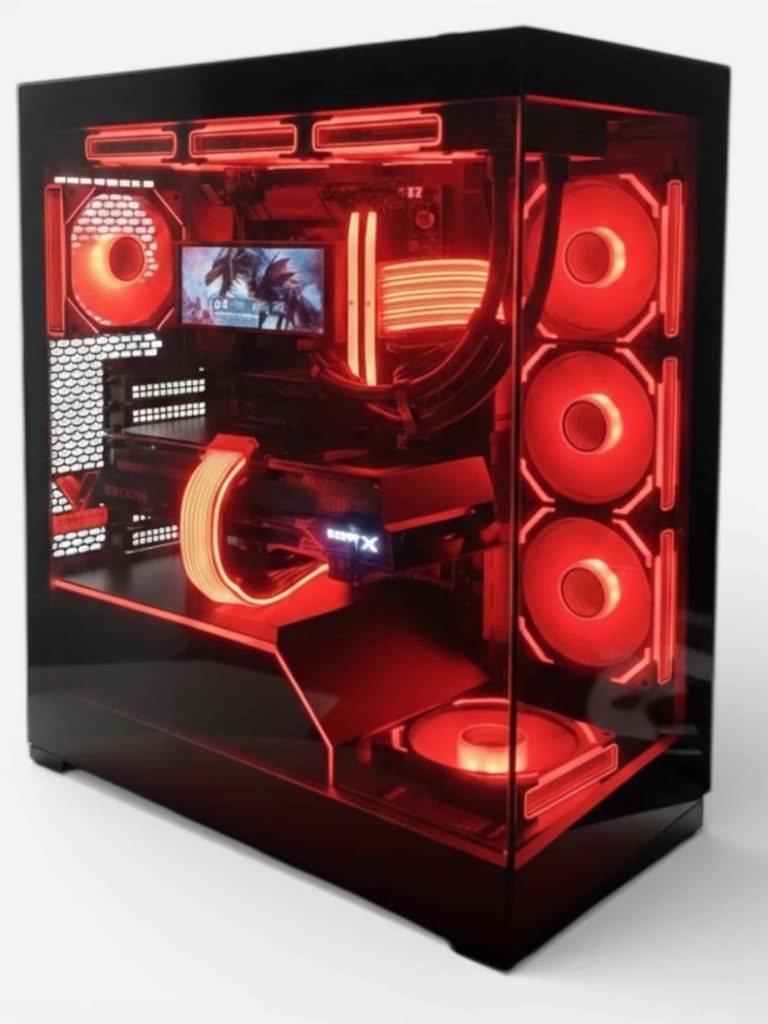
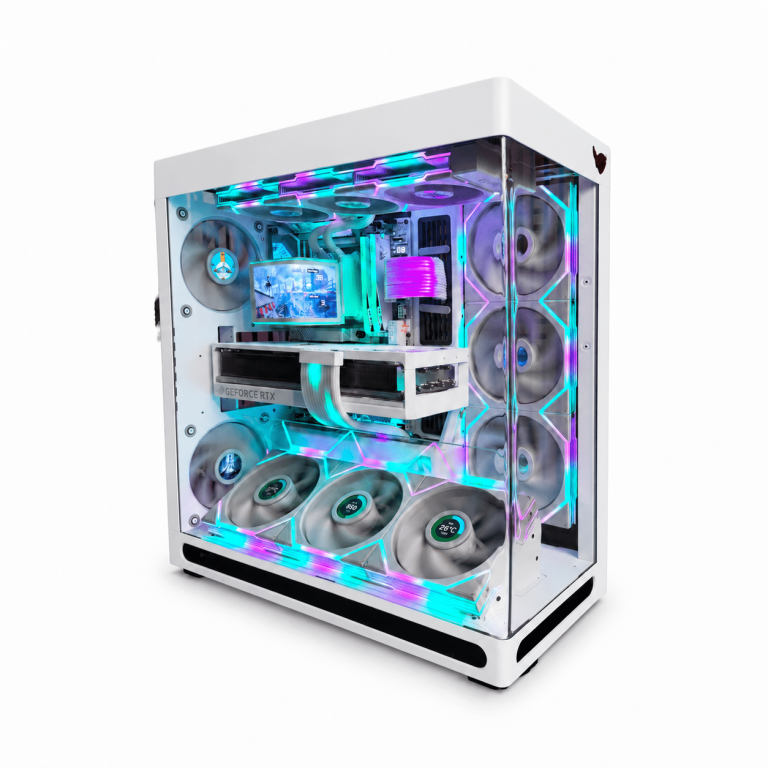
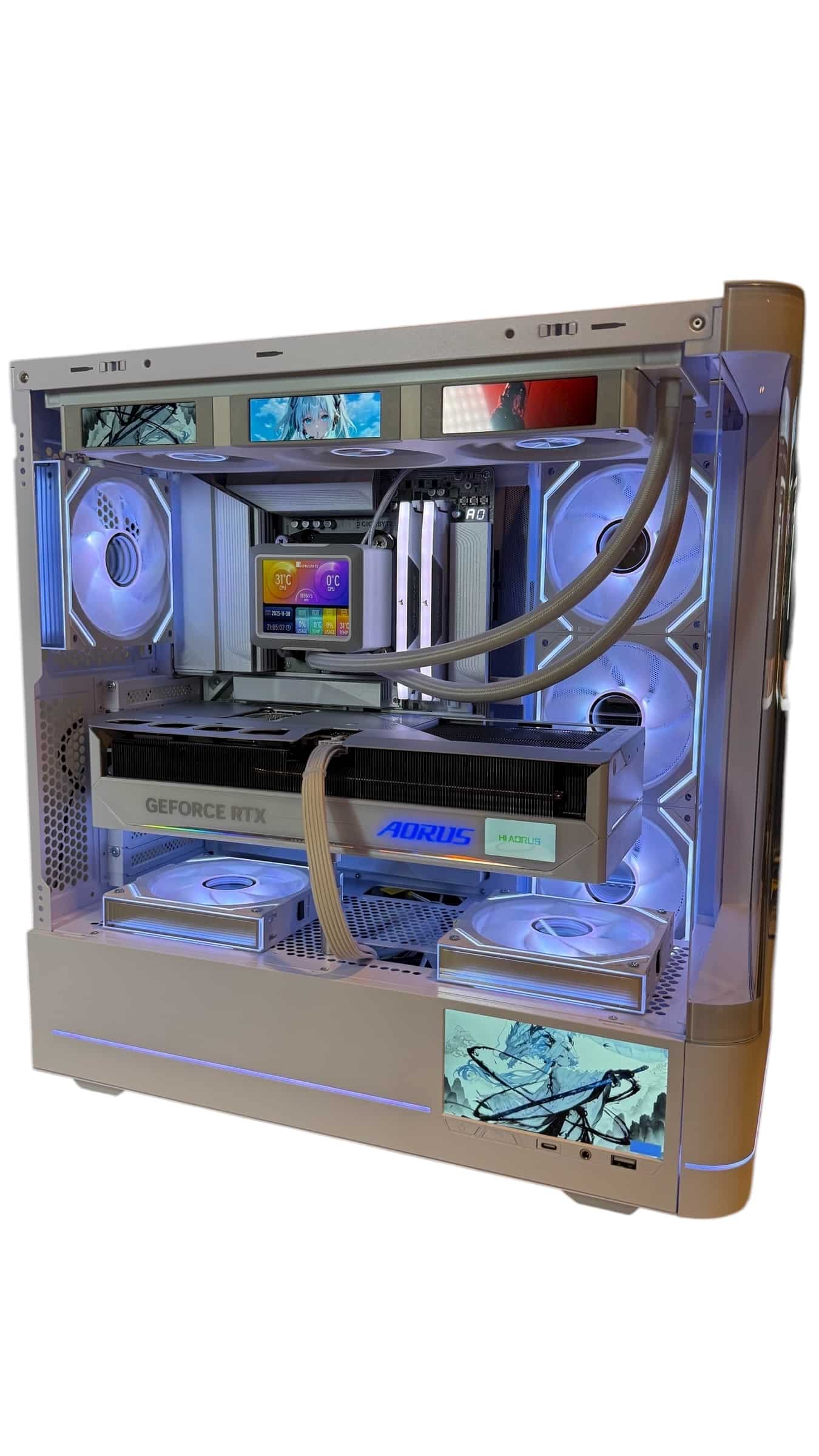
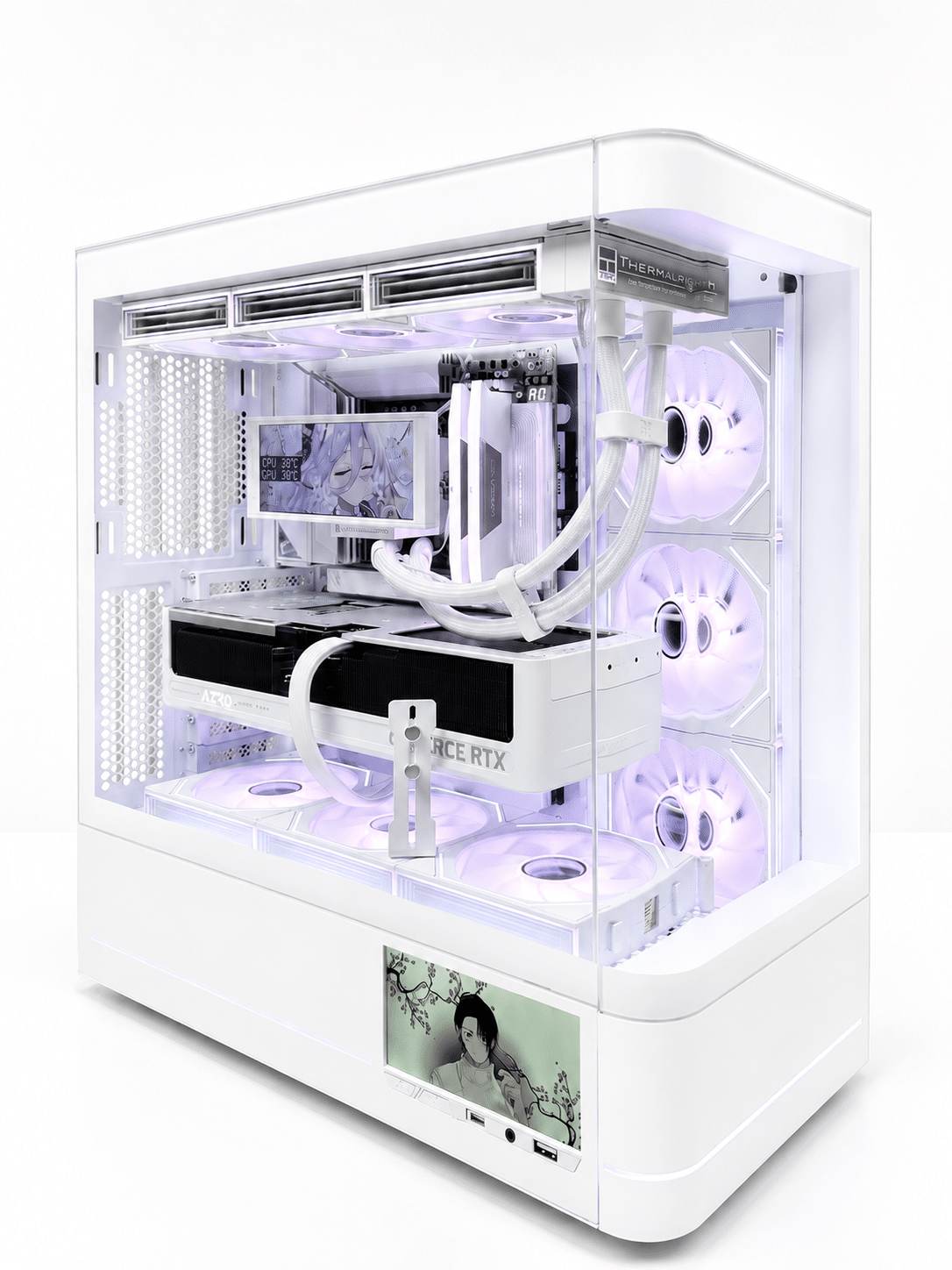
If you would rather skip the parts list, a hand-built 1440p gaming PC is the simplest route. The LUX Optic ICE 9070XT and LUX Optic ICE 5070 TI are close cousins, which makes them an easy way to weigh the 5070 Ti vs 9070 XT choice in the same style of build.
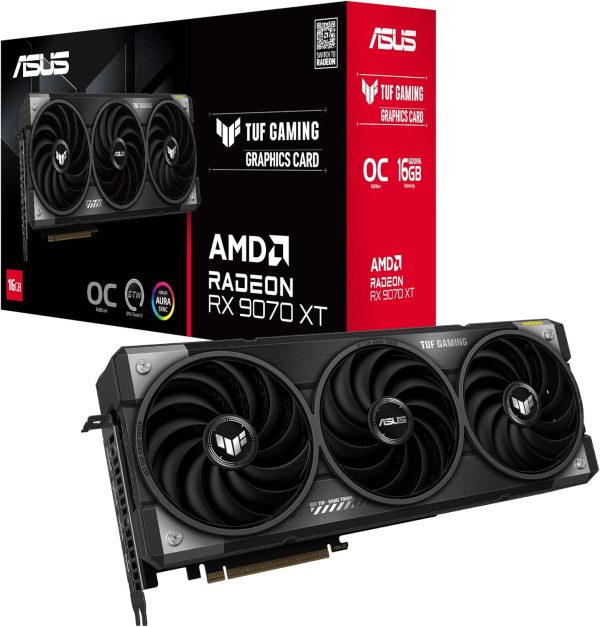
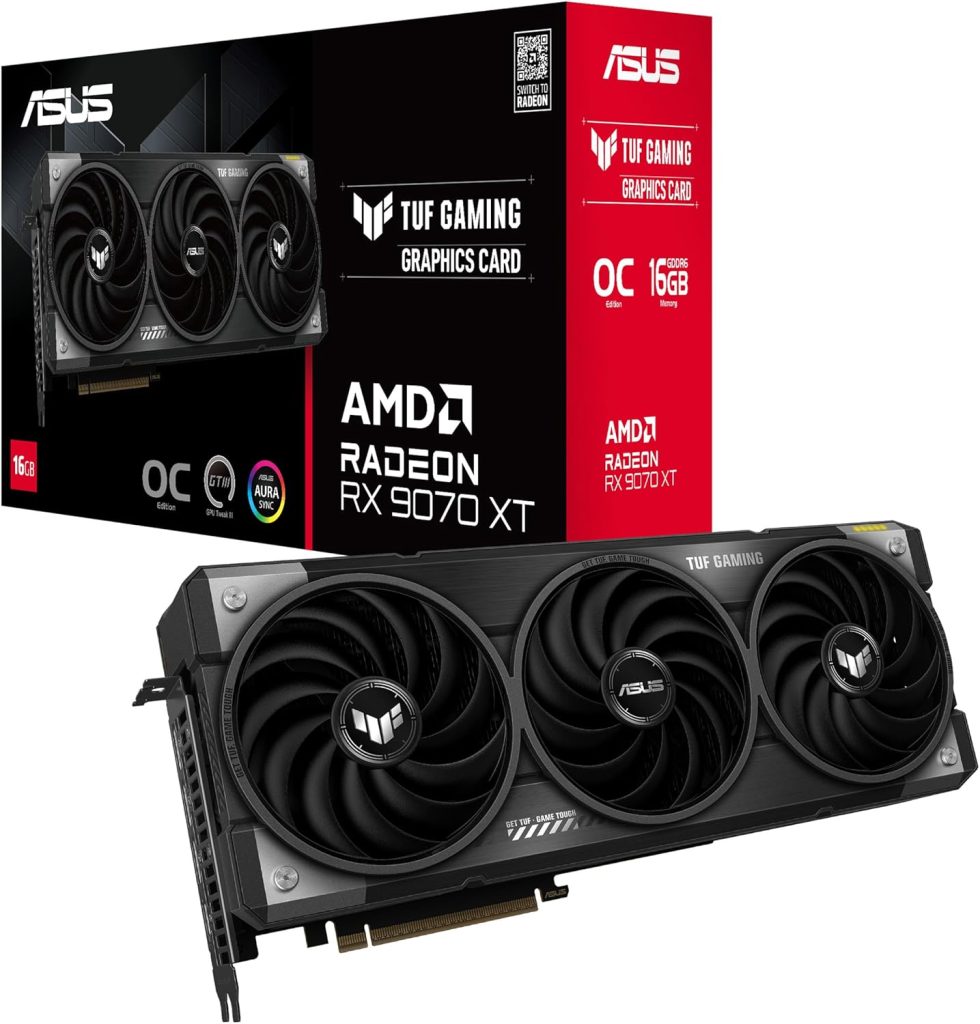
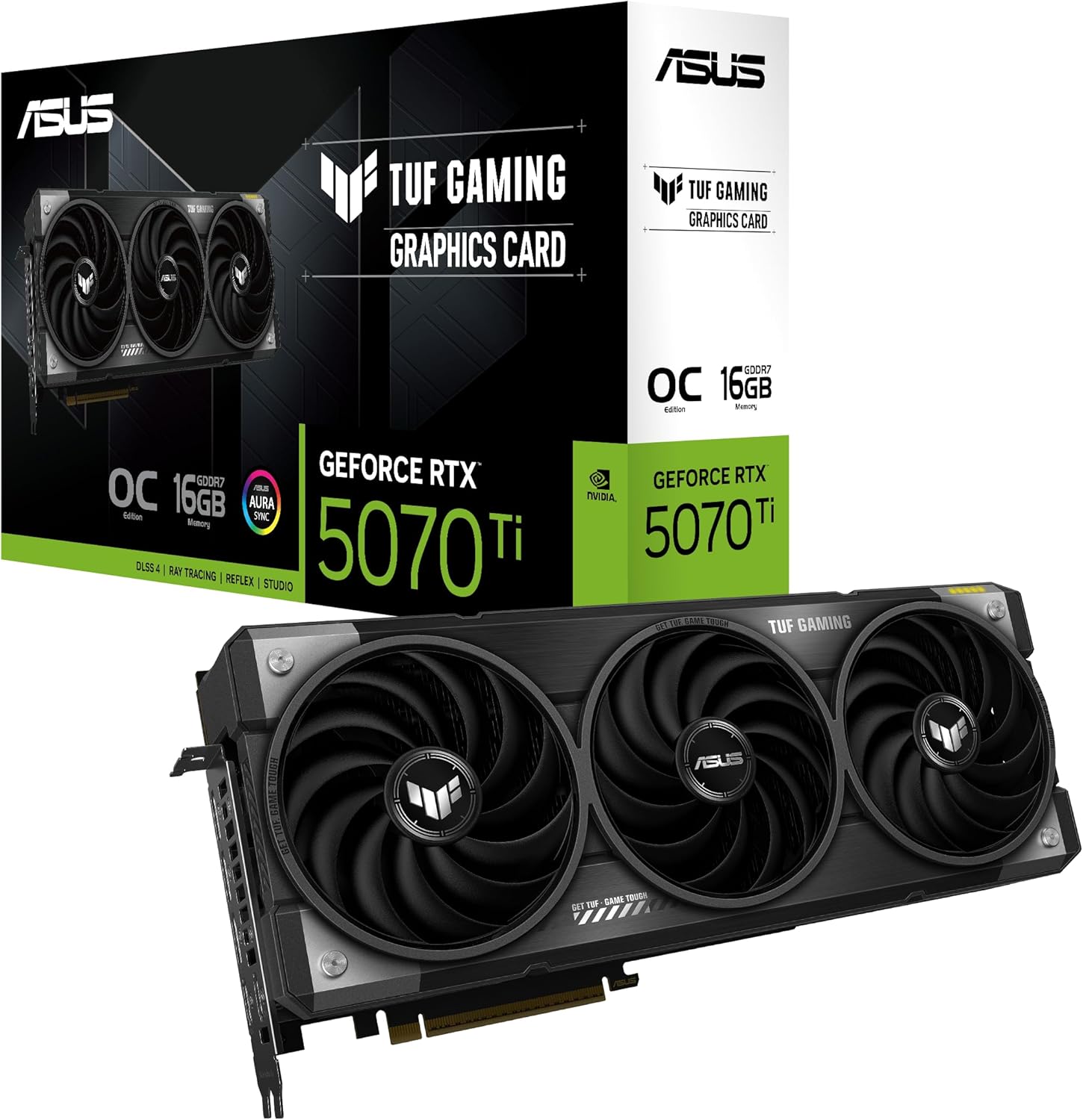
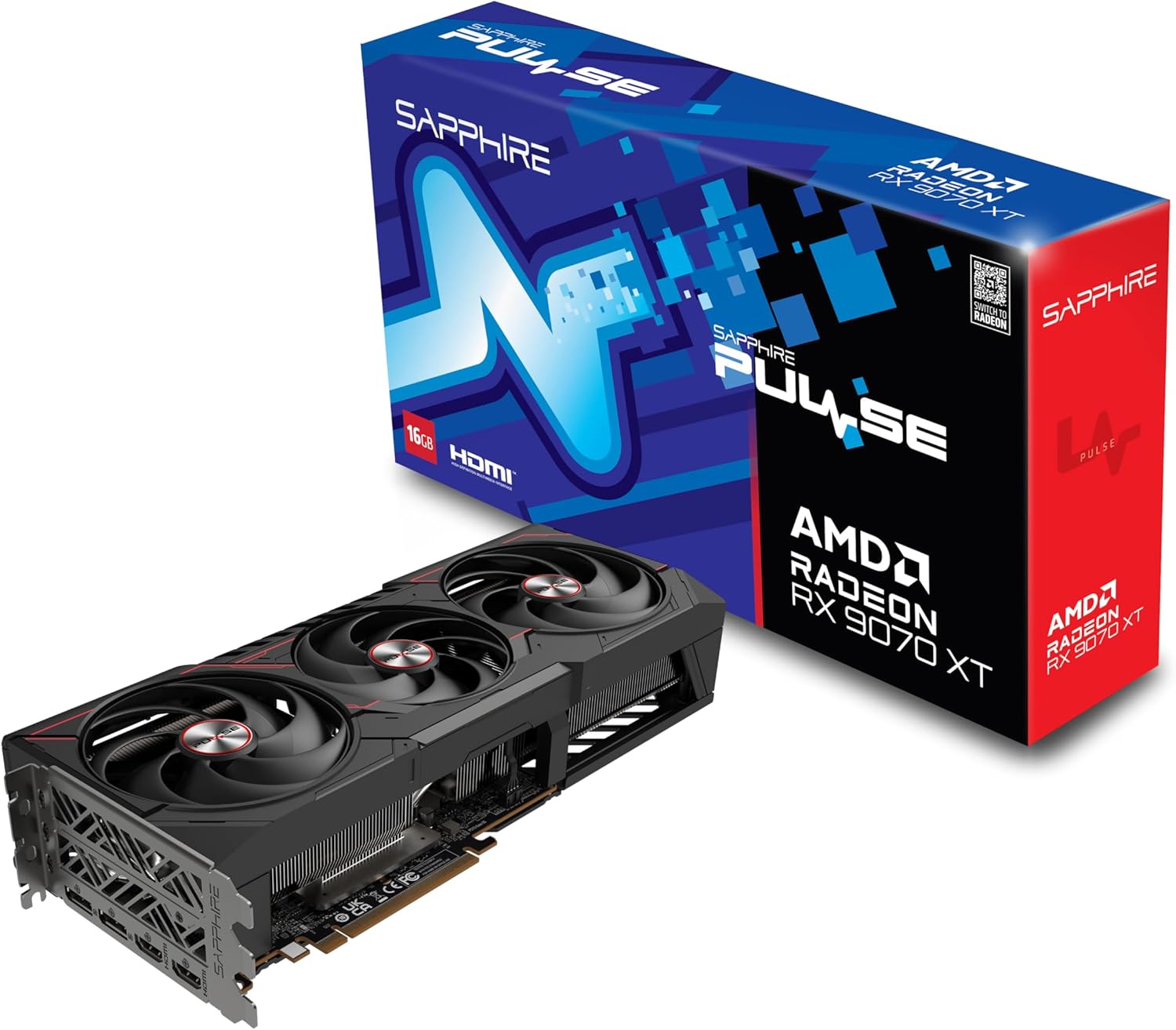
ASUS TUF Gaming RX 9070 XT
The ASUS TUF Gaming RX 9070 XT puts AMD Radeon RX 9070 XT power into your…
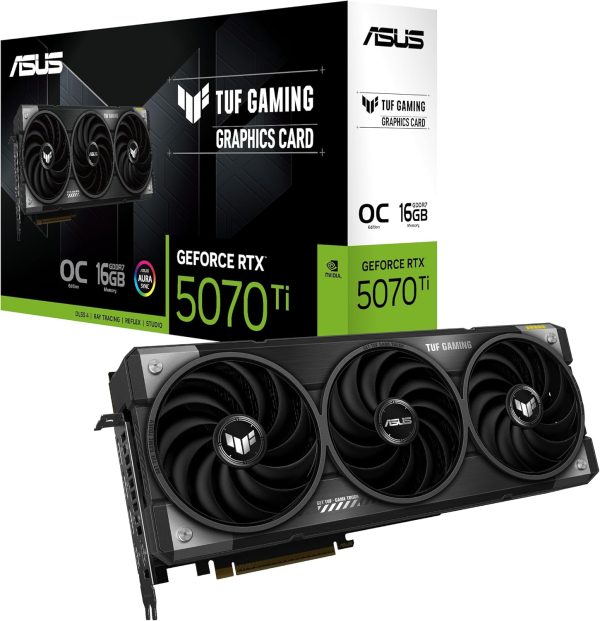
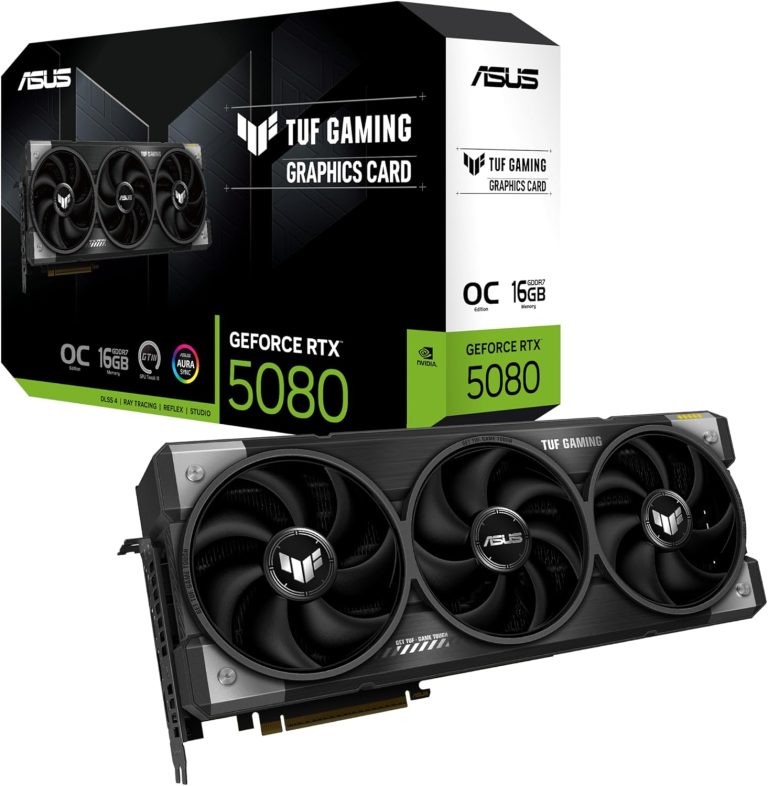
ASUS TUF Gaming GeForce RTX 5070 Ti 16GB GDDR7 OC Edition Gaming
The ASUS TUF Gaming RTX 5070 Ti 16GB GDDR7 OC puts NVIDIA GeForce RTX 5070 Ti…
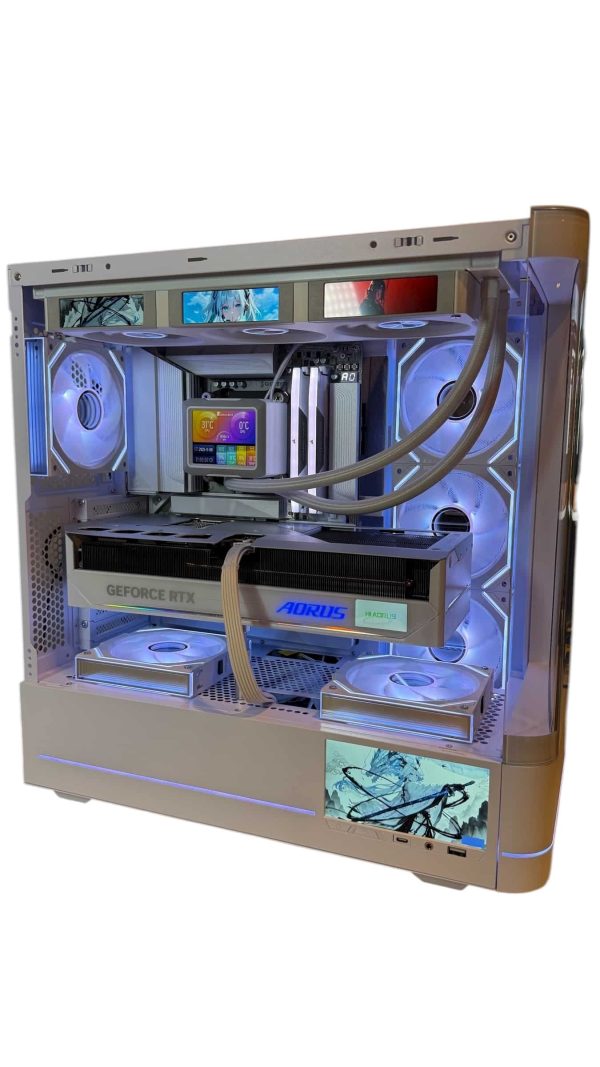
LUX Optic ICE 9070XT
- GPURX 9070 XT
- CPURyzen 7 9800X3D
- RAM32GB DDR5
- SSD2TB NVMe
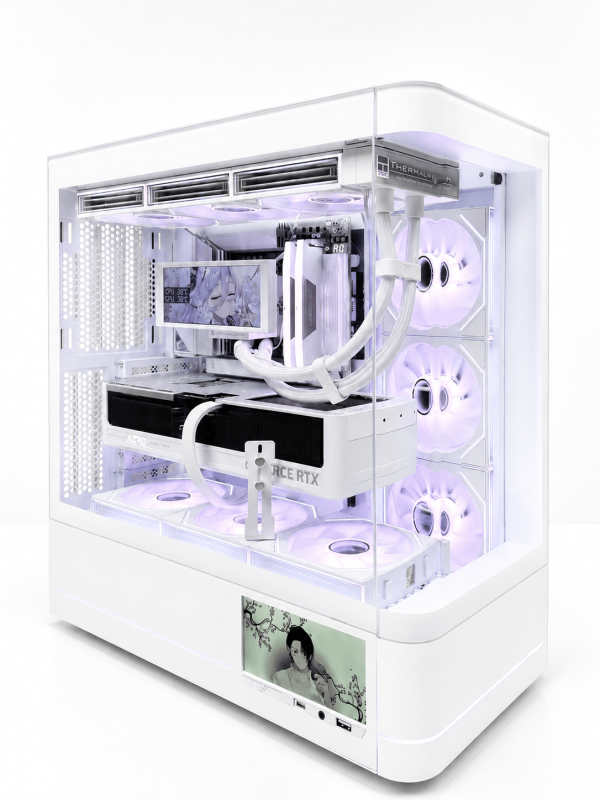
LUX Optic ICE 5070 TI
- GPURTX 5070 Ti
- CPURyzen 7 9800X3D
- RAM32GB DDR5
- SSD2TB NVMe
9070 XT vs 5070 Ti FAQ
Is the 9070 XT better than the 5070 Ti?
It depends on what “better” means to you. On paper the two are close: same 16 GB of VRAM, same 256-bit bus, almost the same power. The 9070 XT launched at a $150 lower MSRP, while the 5070 Ti adds DLSS Multi Frame Generation, DLSS 5, stronger creator tools and CUDA.
Which is better for 4K, the 5070 Ti or 9070 XT?
Both can drive a 4K display, and both lean on upscaling in demanding games at high settings. In a 5070 Ti vs 9070 XT choice for 4K, NVIDIA’s Multi Frame Generation is an extra tool in supported games. For high-settings 4K without compromises, step up to an RTX 5080 or RTX 5090.
Is 16 GB of VRAM enough on these cards?
Yes, 16 GB is comfortable for 1440p and for 4K with upscaling. Both cards have it, so VRAM is not a tiebreaker in the 9070 XT vs 5070 Ti decision. Heavy local AI work or very large 3D scenes are where more memory starts to matter.
Should I wait for an RTX 50 Super card instead?
NVIDIA has not announced an RTX 50 Super refresh, and there is no date. Reports in 2026 say it was delayed or put on hold because of the GDDR7 memory shortage. Buy based on the cards that exist today.
Can I use the same power supply for either card?
Usually, yes. For the 5070 Ti vs 9070 XT pair, AMD and NVIDIA both recommend 750 W, and the cards draw within a few watts of each other. Just confirm your PSU has the right connectors for the partner model.
Which Should You Choose?
For most gamers on a firm budget, the RX 9070 XT is the smart buy: 16 GB of VRAM, FSR 4 and a card AMD built for high-refresh 1440p, for less money. If you stream, edit or want NVIDIA’s DLSS feature set, the RTX 5070 Ti earns its premium, especially when current prices put the two close together. That is the honest 9070 XT vs 5070 Ti answer.
Browse both in our graphics card collection, or ask which fits your build. Real builders answer at sales@luxvibepcs.com or through our contact form, and every Luxvibe PC is hand-built to order, so upgrades and changes are always possible before we build.