The RTX 5090 is the top card in NVIDIA’s GeForce RTX 50 Series, and NVIDIA calls it the most powerful GeForce GPU it has ever made. With 21,760 CUDA cores and 32 GB of GDDR7, it’s the card for maximum frame rates at 4K, full path tracing, or one GPU that also carries heavy AI, 3D and video work. It’s also the hardest card to power, cool and pay for.
Below, our build team covers the specs, what 32 GB of VRAM is really for, DLSS 5, 2026 pricing and how to plan a build around NVIDIA’s flagship.
In This Guide
RTX 5090 Specs at a Glance
The NVIDIA GeForce RTX 5090 launched on January 30, 2025 at a $1,999 US MSRP. It’s built on Blackwell, with 5th-gen Tensor cores, 4th-gen RT cores and PCIe 5.0. These RTX 5090 specs come from NVIDIA’s official RTX 5090 page and its GeForce compare page.
| Spec | GeForce RTX 5090 |
|---|---|
| CUDA cores | 21,760 |
| Base / boost clock | 2.01 GHz / 2.41 GHz |
| Memory | 32 GB GDDR7, 512-bit |
| Memory bandwidth | 1,792 GB/s |
| AI performance | 3,352 AI TOPS |
| Video engines | 3x 9th-gen NVENC, 2x 6th-gen NVDEC |
| Total graphics power | 575 W |
| Required system power | 1,000 W |
| Power connector | 16-pin 12V-2×6, or 4x 8-pin via adapter |
| Outputs | 3x DisplayPort 2.1b (UHBR20), 1x HDMI 2.1b |
| Max resolution | 4K at 480 Hz or 8K at 165 Hz with DSC |
Three lines matter most when you shop. The 512-bit bus is twice as wide as the RTX 5080’s, which is where the 1,792 GB/s of bandwidth comes from. Three NVENC encoders speed up exports and streaming. And 575 W of power shapes every other part of the build.
How Much RTX 5090 VRAM Do You Really Need?
The RTX 5090 VRAM pool is 32 GB of GDDR7. The RTX 5080 and RTX 5070 Ti carry 16 GB, and the previous flagship, the RTX 4090, has 24 GB of GDDR6X. More memory doesn’t make a game faster by itself; it gives the GPU room to hold everything a scene needs without shuffling data over the PCIe bus.
In games, VRAM fills with high-resolution textures, ray tracing data and the buffers that upscaling and frame generation use. NVIDIA tests and markets the 16 GB RTX 5080 at 4K max settings, so 32 GB isn’t the price of entry to 4K. On the RTX 5090, it’s headroom for the heaviest titles, super-ultrawide and 8K displays, and the next few years of releases.
The extra memory really earns its keep outside of games:
- Local AI: a model has to fit in VRAM to run at full speed, so 32 GB lets you load larger models, or longer contexts, than a 16 GB card can hold.
- 3D rendering: GPU renderers want the whole scene in memory, so big architectural or film scenes have far more room.
- Video editing: 8K timelines, color grades and stacked effects use VRAM quickly in DaVinci Resolve and Premiere Pro.
Where the Flagship Sits in NVIDIA’s Lineup
Spec ratios are the honest way to compare cards without inventing benchmark numbers. Here’s the RTX 5090 next to the card below it and the generation before.
| Spec | RTX 5090 | RTX 5080 | RTX 4090 |
|---|---|---|---|
| CUDA cores | 21,760 | 10,752 | 16,384 |
| Boost clock | 2.41 GHz | 2.62 GHz | 2.52 GHz |
| Memory | 32 GB GDDR7 | 16 GB GDDR7 | 24 GB GDDR6X |
| AI TOPS | 3,352 | 1,801 | 1,321 |
| Total graphics power | 575 W | 360 W | 450 W |
| Launch MSRP | $1,999 | $999 | $1,599 |
Against the RTX 5080: roughly twice the CUDA cores, twice the memory and about 1.9 times the bandwidth, for twice the launch price and 215 W more power. The 5080 runs a higher boost clock, and games rarely scale perfectly with core count, so treat the ratios as a ceiling, not a promise. Our RTX 5080 vs 5090 comparison covers who should step up.
Against the RTX 4090: about a third more CUDA cores, 8 GB more memory on faster GDDR7, and roughly 2.5 times the AI TOPS, plus RTX 50-only Multi Frame Generation. If you own a 4090 already, read our 4090 upgrade breakdown before you spend.
DLSS 4, Multi Frame Generation and DLSS 5
A big part of what you pay for is software, and some of it is exclusive to the RTX 50 Series:
- DLSS 4 (January 2025) introduced Multi Frame Generation for RTX 50 cards. NVIDIA says it can generate up to five frames per rendered frame.
- DLSS 4.5 added Dynamic Multi Frame Generation, also RTX 50 only, plus a second-gen transformer model for Super Resolution and Ray Reconstruction.
- DLSS 5 was announced March 16, 2026 and launched September 3, 2026 with NBA 2K27, adding 3D-guided neural rendering. It launched on RTX 50 only; NVIDIA says RTX 40 support is planned later.
An honest caveat: generated frames look smoother, but responsiveness still follows the frames the GPU actually renders. Frame generation works best when the base frame rate is already healthy, which is exactly where the RTX 5090 shines. Support varies by game, so check your titles on NVIDIA’s DLSS page.
RTX 5090 Price in 2026: MSRP vs Reality
The RTX 5090 price at launch was $1,999 US MSRP, and partner cards with bigger coolers and factory overclocks typically sit above that. In 2026, a global DRAM and GDDR7 shortage driven by AI data-center demand has pushed street prices well above launch MSRP. Prices move week to week, so check today’s numbers on our graphics card range.
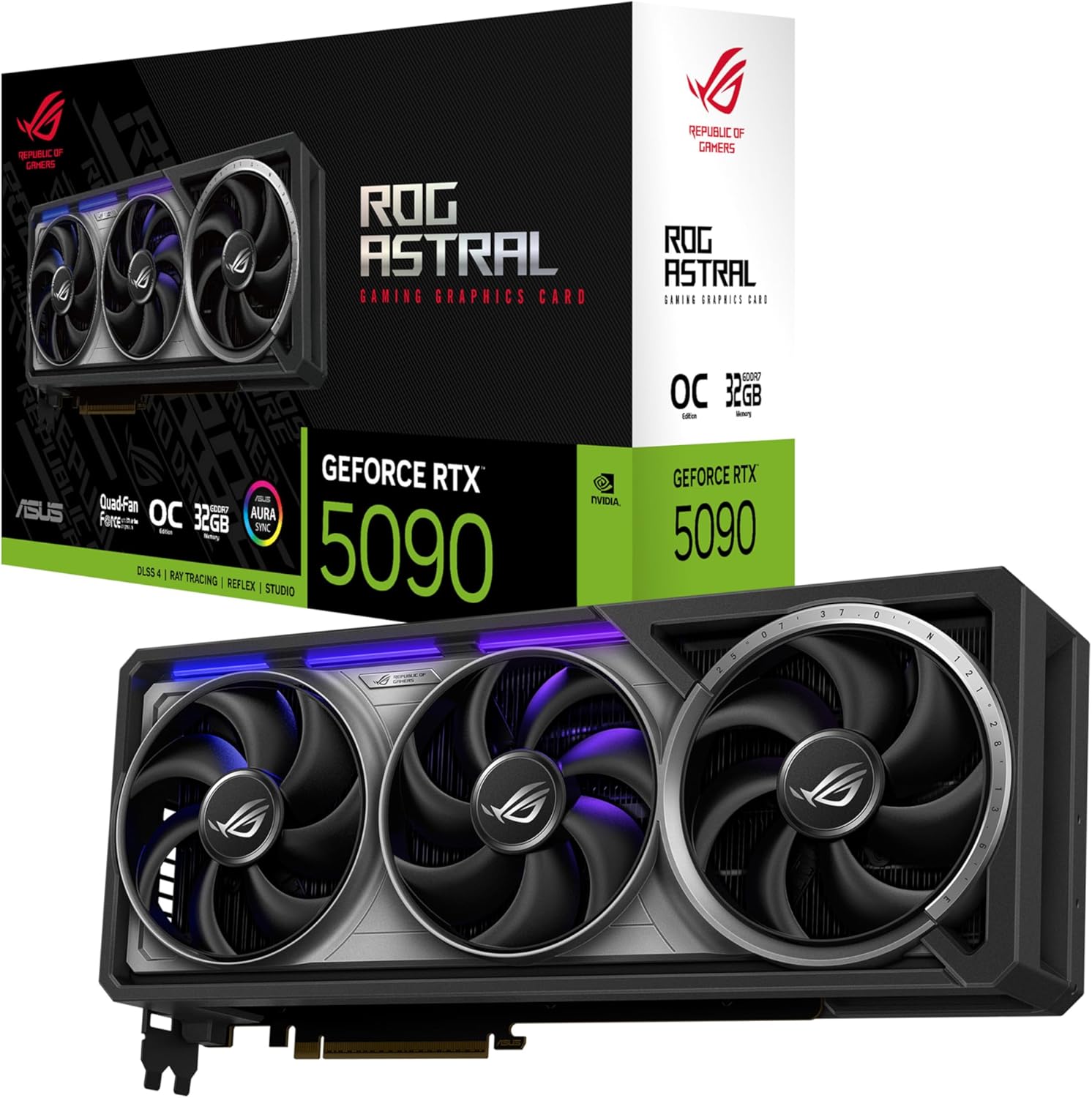
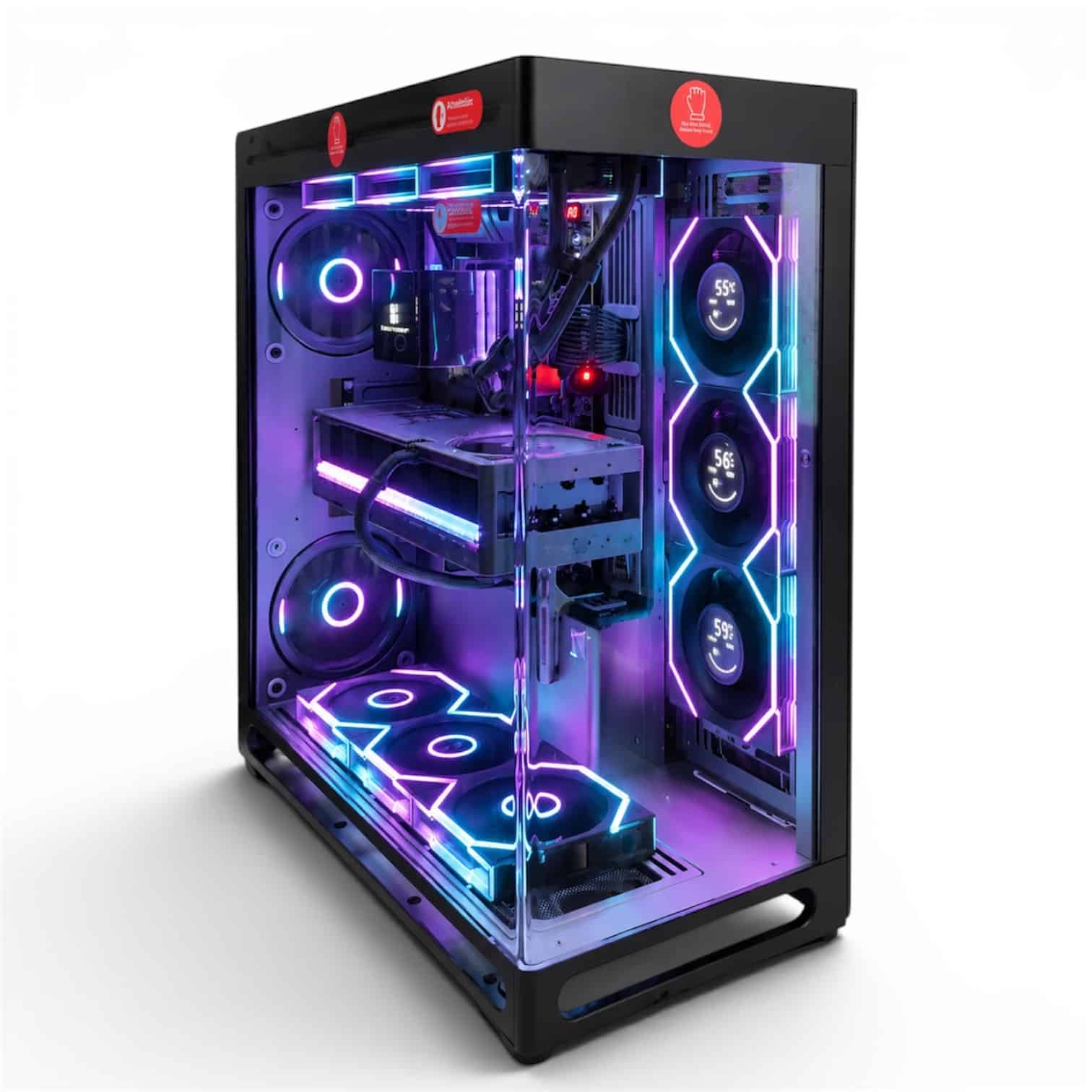
- Know what a premium model buys. Every RTX 5090 has the same 21,760 CUDA cores and 32 GB of memory. Cards like the ASUS ROG Astral RTX 5090 differ in cooling, clocks, size and looks, not the GPU itself.
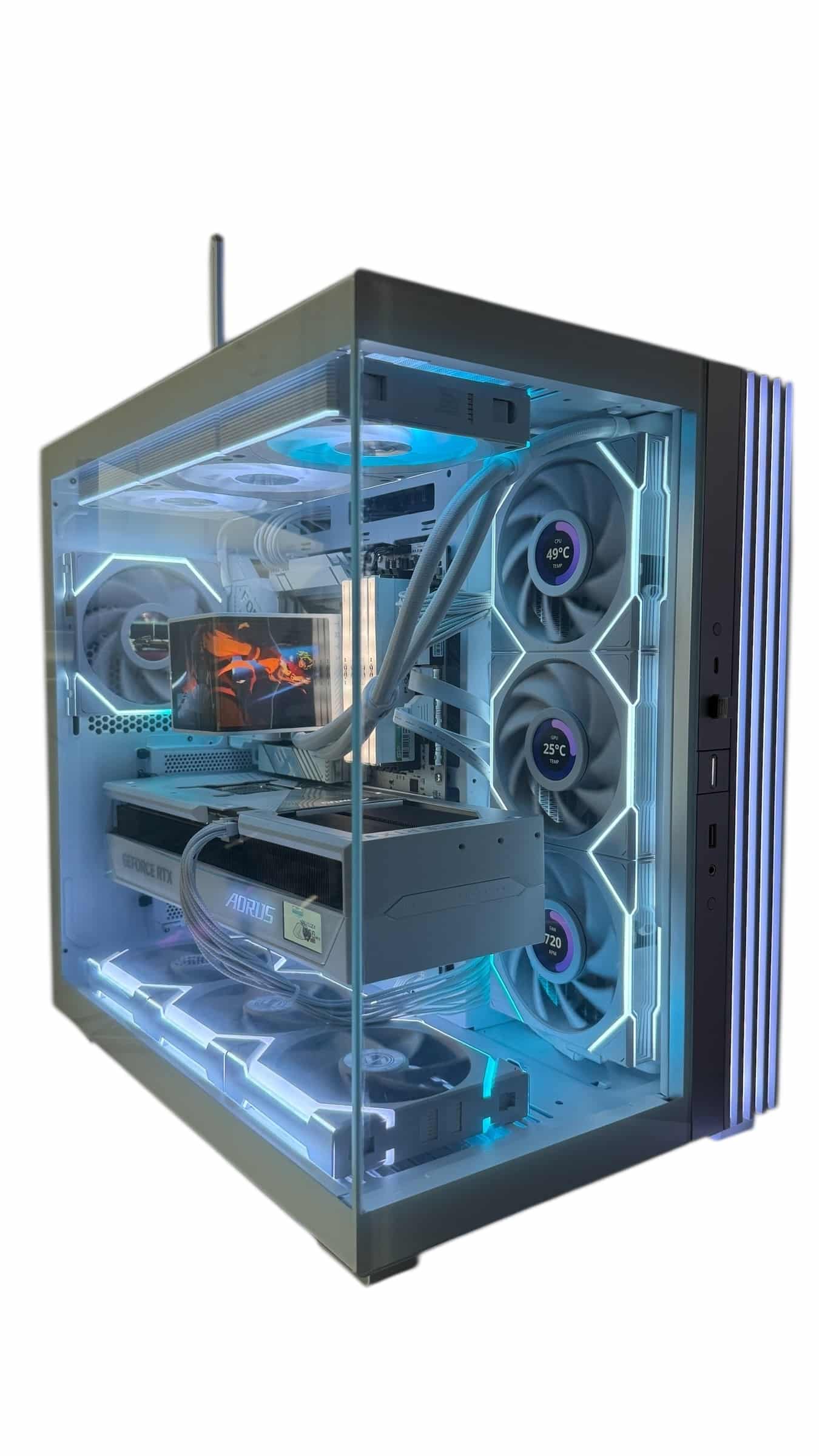
- Price the whole system. The card needs a 1,000 W-class PSU, strong airflow and a fast CPU. A complete RTX 5090 gaming PC shows the full cost in one place, and every system we sell is hand-built to order.
Power, Cooling and Case Planning
At 575 W, the RTX 5090 draws 125 W more than the RTX 4090. NVIDIA lists 1,000 W of required system power, based on a Ryzen 9 9950X test system, and the card takes one 16-pin 12V-2×6 cable or four 8-pin cables through the included adapter.
- Power supply: treat 1,000 W as the floor and use a quality unit with a native 12V-2×6 cable rather than a four-way adapter. Our power supply range covers 1,000 W to 1,600 W units.
- Connector care: seat the 16-pin plug fully, and don’t bend the cable sharply right at the connector.
- Size: NVIDIA’s Founders Edition is a two-slot card, 304 mm long. Many partner cards are much larger, so check GPU clearance and plan a support bracket.
- Airflow: up to 575 W of heat ends up in your case, so pick one with real intake airflow.
Who Should Buy One, and Who Shouldn’t
The RTX 5090 makes sense if you play at 4K on a high-refresh monitor with path tracing on, run super-ultrawide or 8K displays, create as much as you game, or want the longest possible life from one GPU.
It’s probably not for you if you play at 1440p at 144 to 165 Hz, mostly play esports, or want a compact, quiet build. An RTX 5080 or 5070 Ti is the smarter spend there. Our guide to the best GPU for 4K gaming compares the realistic options.
Pair it with a fast gaming CPU such as the Ryzen 7 9800X3D, or the 16-core Ryzen 9 9950X3D if you also render. Add 32 GB of DDR5 for gaming, 64 GB for heavy creative work, and a 360 mm liquid cooler. Upgrades and changes are always possible before we build.
Asus ROG Astral RTX 5090
The Asus ROG Astral RTX 5090 puts NVIDIA GeForce RTX 5090 power into your desktop, backed…
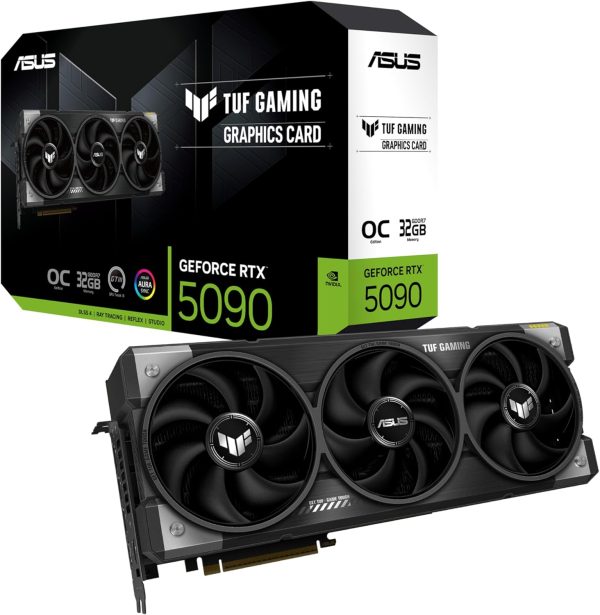
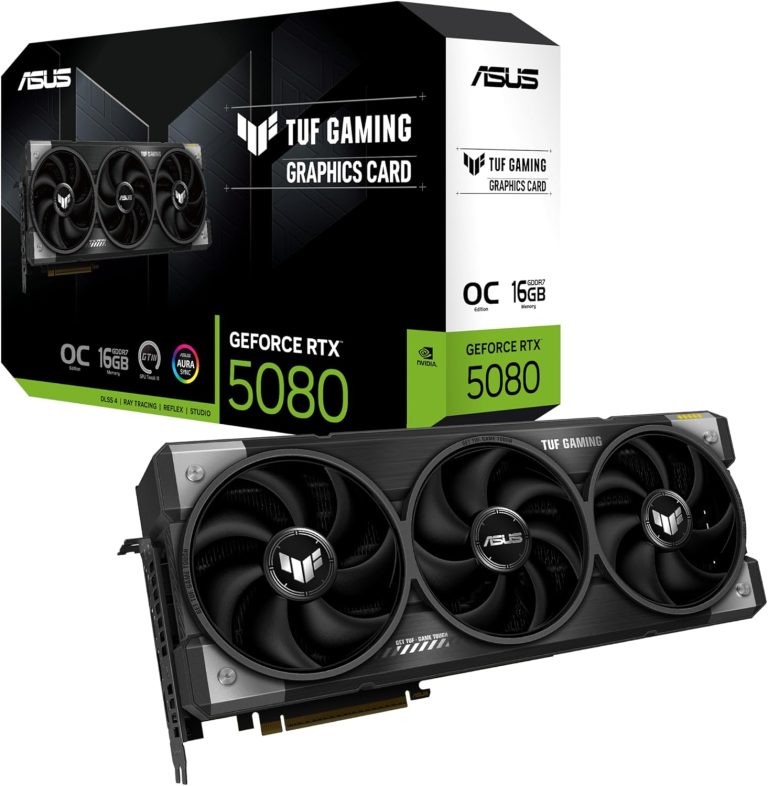
ASUS TUF Gaming RTX 5090
Upgrade to the ASUS TUF Gaming RTX 5090 and get NVIDIA GeForce RTX 5090 performance for…
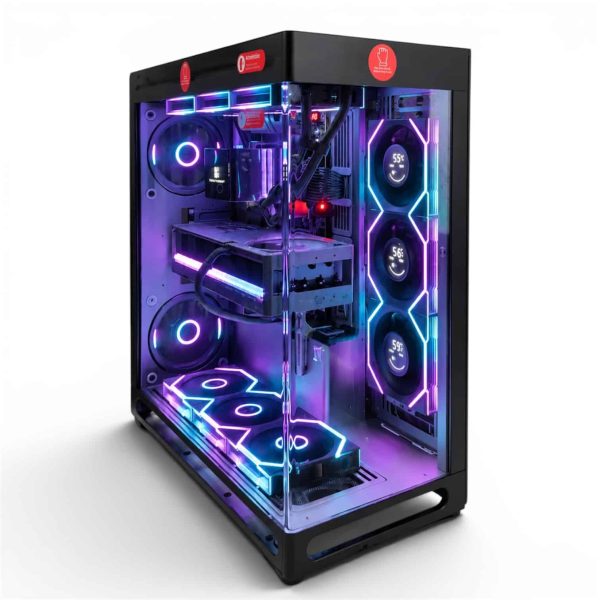
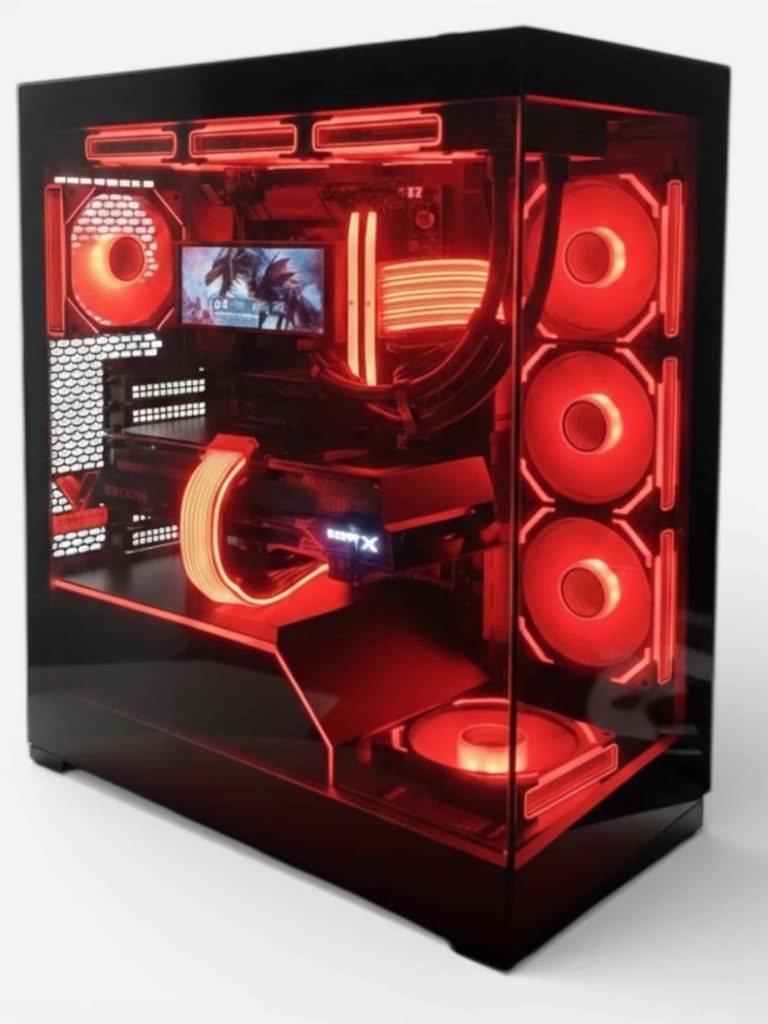
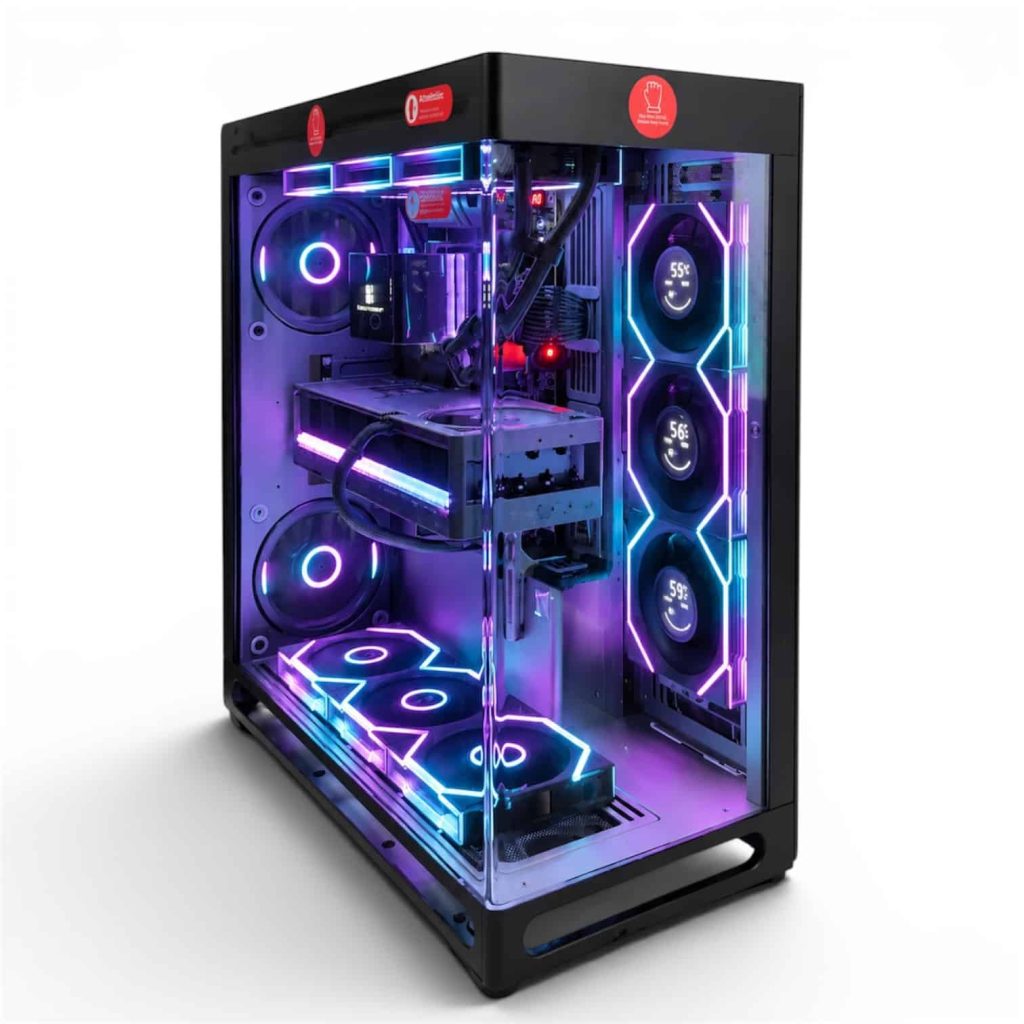
LUX View 5090
- GPURTX 5090
- CPURyzen 9 9950X3D
- RAM64GB DDR5
- SSD4TB NVMe
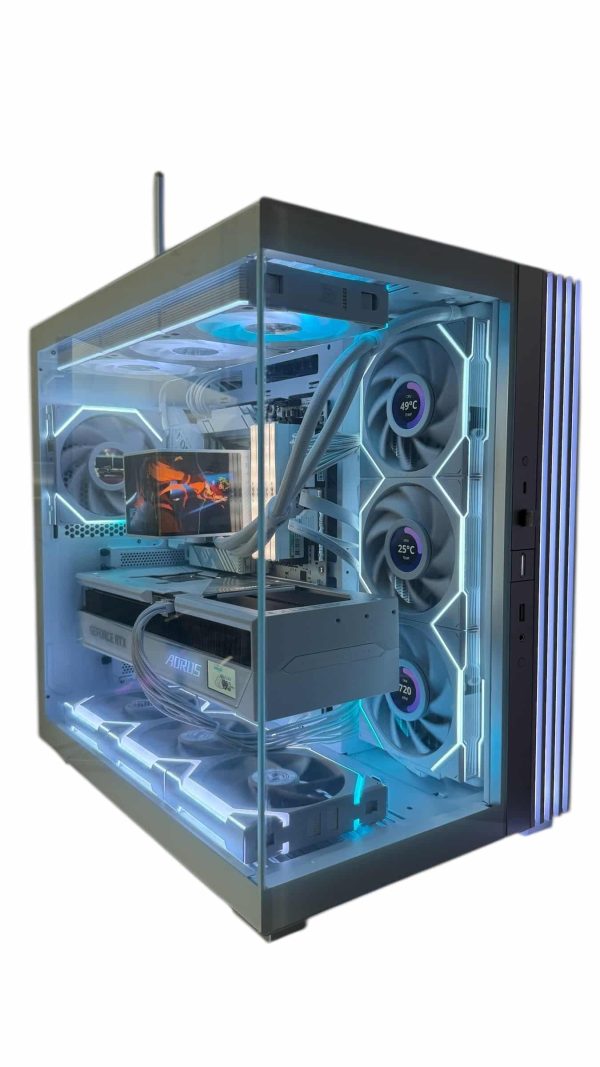
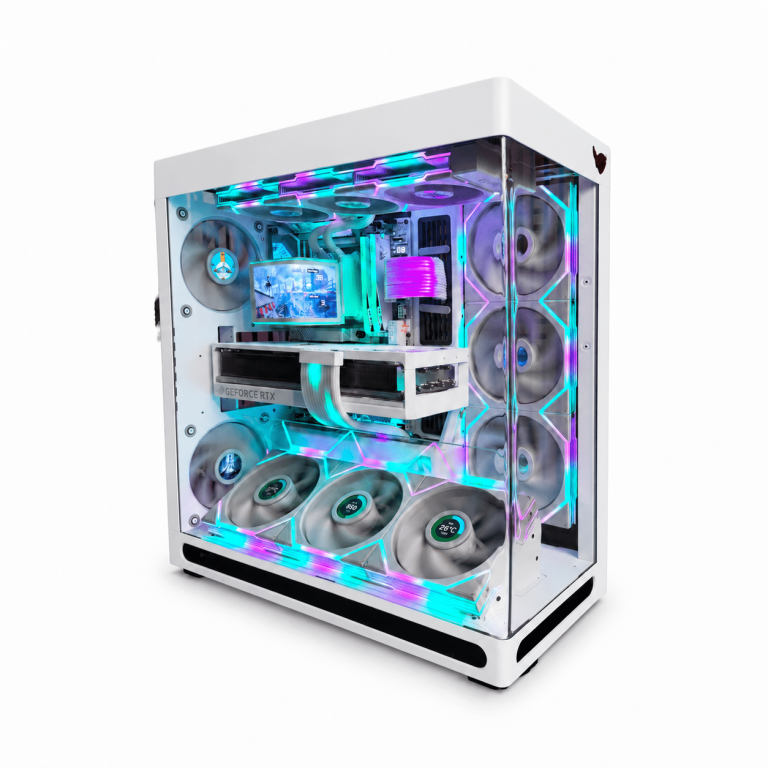
LUX Vision SNOW 5090
- GPURTX 5090
- CPURyzen 9 9950X3D
- RAM64GB DDR5
- SSD4TB NVMe
RTX 5090 FAQ
Is the 5090 worth it for gaming?
For high-refresh 4K with path tracing, yes. It’s NVIDIA’s most powerful GeForce card and the only one with 32 GB of VRAM. Below 4K or on a tight budget, the extra money buys less. Note that the RTX 5090 price in 2026 sits well above its $1,999 MSRP because of the memory shortage.
How much VRAM does the 5090 have?
The RTX 5090 has 32 GB of GDDR7 on a 512-bit bus, with 1,792 GB/s of bandwidth per NVIDIA. That’s double the RTX 5080’s 16 GB and 8 GB more than the RTX 4090.
What power supply does the 5090 need?
NVIDIA lists 1,000 W of required system power for the RTX 5090. Treat that as the minimum, use a native 12V-2×6 cable, and size up for a high-core-count CPU or overclocking.
Is the 5090 good for AI and video editing?
Yes. 3,352 AI TOPS and 32 GB of memory make the RTX 5090 the most capable GeForce card for local AI, and three NVENC encoders plus RTX 50’s 4:2:2 hardware decode help in editing apps. For a full editing build, pair it with a high-core-count CPU and 64 GB of memory.
Is the 5090 overkill below 4K?
Often, yes. At lower resolutions the CPU becomes the limit sooner, so you pay flagship money for performance you may not see, unless you chase very high refresh rates or plan to move to 4K soon.
The Bottom Line
The RTX 5090 is for buyers who want the most a GeForce GPU can do today: high-refresh 4K with path tracing, 32 GB of VRAM for AI and 3D, and full DLSS 5 support. It asks for 575 W, a 1,000 W PSU and 2026 pricing well above MSRP. If that fits your setup, it’s the flagship to own. If you play at 1440p or want better value, look one step down.
Browse every card on our graphics card page, or ask our builders at sales@luxvibepcs.com or through our contact form. We ship across the USA from Oshkosh, Wisconsin.